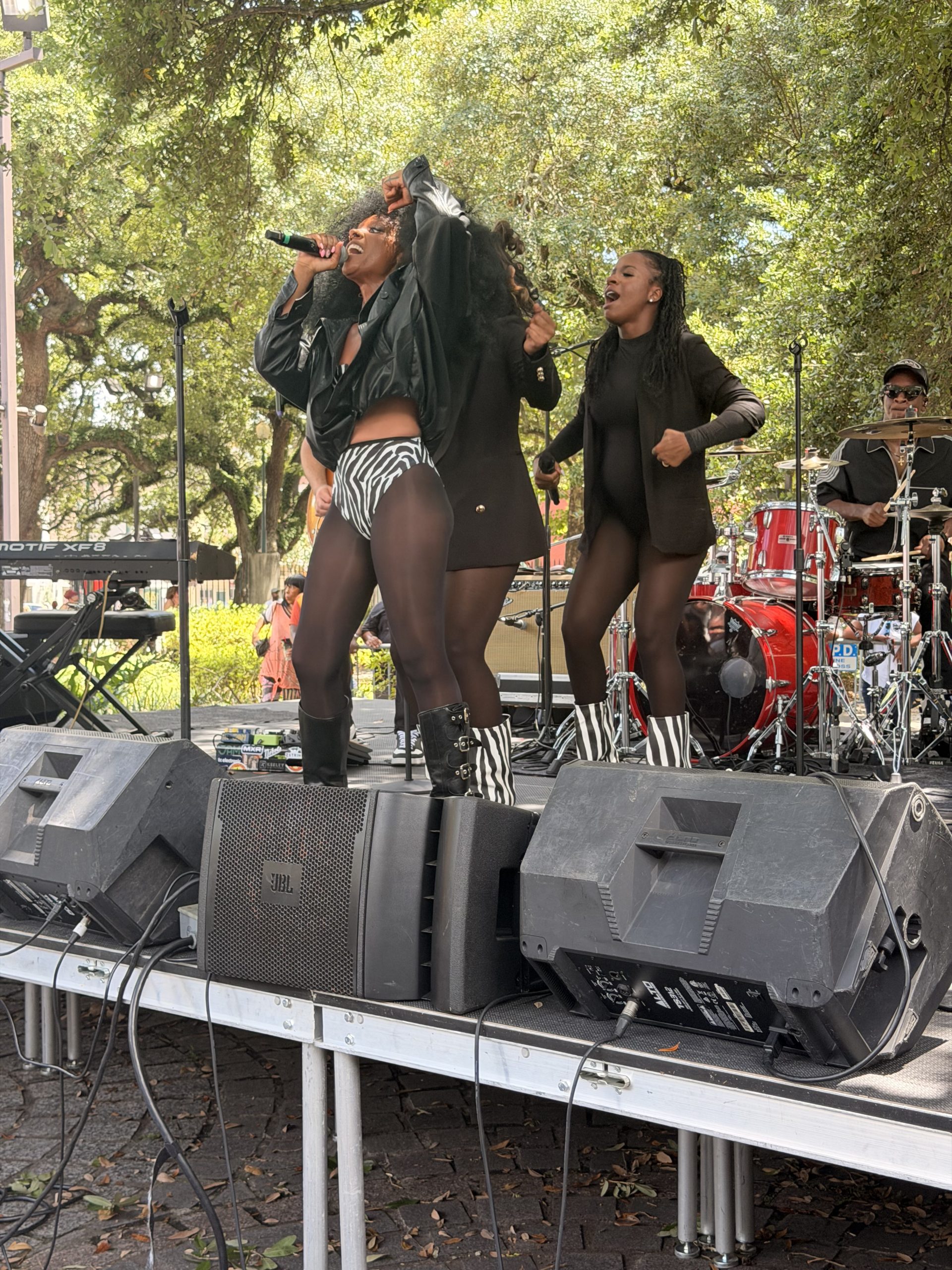
I was in New Orleans on June 19, 2026, on the day of a relatively new holiday, Juneteenth.
Juneteenth itself originated in Galveston, Texas, on June 19, 1865, when Union Major General Gordon Granger announced General Order No. 3, informing enslaved Texans that they were free.
But the story of Juneteenth becoming a national/federal holiday in 2021 has an important New Orleans chapter.
In 1994, New Orleans ministers helped establish the National Juneteenth Observance Foundation (NJOF). The organization became one of the principal national advocacy organizations pushing for Juneteenth to receive broader recognition and ultimately federal holiday status.
That is a remarkable historical connection:
Galveston → the birth of Juneteenth in 1865
New Orleans → an important center of the modern movement to nationalize Juneteenth
Washington, D.C. → federal recognition in 2021
The New Orleans involvement was also rooted in the city’s own experience with racial injustice. The founders were responding not simply to historical events but to contemporary racial inequality and police brutality. Their argument was essentially that Juneteenth could serve as a national reminder that emancipation was both a historic achievement and an unfinished American promise.
So, while New Orleans did not create Juneteenth, it helped create the modern national movement that elevated Juneteenth from a regional observance into a national commemoration.
New Orleans is arguably one of the most appropriate cities in America in which to celebrate Juneteenth.
The reason is that African-American history in New Orleans is not simply a story of slavery and emancipation. It is also a story of cultural survival and cultural creation.
And the physical symbol of that history is Congo Square.
Congo Square is extraordinary
During the era of slavery, enslaved Africans and free people of color gathered at Congo Square for music, dance, commerce, social interaction and religious/cultural expression.
These gatherings provided something extraordinarily important:
enslaved people were able to preserve African traditions despite slavery’s attempt to destroy their autonomy and cultural identity.
The traditions of rhythm, percussion, dance, call-and-response and communal musical expression associated with Congo Square became part of the cultural DNA from which New Orleans music eventually emerged.
That means there is an extraordinary historical progression:
Africa → enslaved Africans → Congo Square → New Orleans musical traditions → jazz → American popular music
And Juneteenth adds another dimension:
enslavement → emancipation → freedom → cultural survival → cultural influence
Consequently, celebrating Juneteenth at Congo Square is much more than holding a concert in a convenient park.
It is almost a living historical reenactment of freedom through culture.
Dawn Richard is a particularly appropriate artist for this occasion because she is a New Orleans native whose career embodies the evolution of Black music from New Orleans into contemporary American popular music.
The 2026 festival specifically featured Richard as its headline/featured performer, and contemporary event coverage identifies her as a NOLA native and renowned singer.
The performance took place on Friday, June 19, 2026, in Congo Square, at 901 North Rampart Street.
Richard was born and raised in New Orleans and has repeatedly incorporated the city’s musical and cultural heritage into her artistic identity.
Her career has also been unusually expansive. She became nationally known through Danity Kane and Diddy–Dirty Money, but her later solo work moved substantially beyond conventional commercial R&B/pop.
That evolution is important because it parallels something fundamental about New Orleans music:
New Orleans has always absorbed outside influences and transformed them into something new.
Jazz did it.
Rhythm & blues did it.
Funk did it.
Hip-hop did it.
And contemporary artists such as Dawn Richard continue doing it.
So her appearance at Congo Square can be understood as a New Orleans artist returning home to the historical source of the city’s Black musical identity.