Amity, Oregon: Twenty-Eight Years Later
The drive into Amity on September 12th felt different from most of the drives I had made during the previous months. Normally, I was thinking about where I would camp that night, how many miles I needed to cover, what I wanted to see, and what the weather was going to do. This time, I was simply trying to get to a place where two people I hadn’t seen in twenty-eight years were waiting for me.
That number kept bouncing around in my head as I drove through the Oregon countryside. Twenty-eight years is a long time. A lot can happen in that amount of time, and it had. Careers, marriages, children, moves, successes, disappointments, parents getting older, and all of the ordinary and extraordinary things that make up a life. Yet there are some friendships that seem to survive the passage of time almost untouched.
Jeff and Karen were one of those friendships.

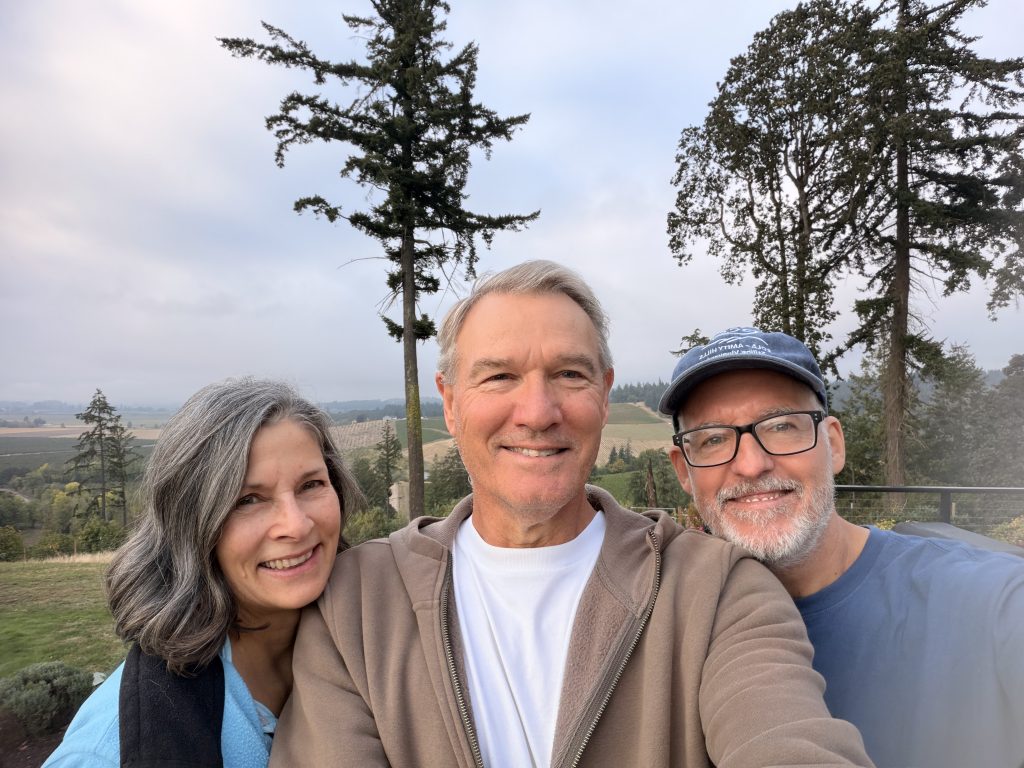
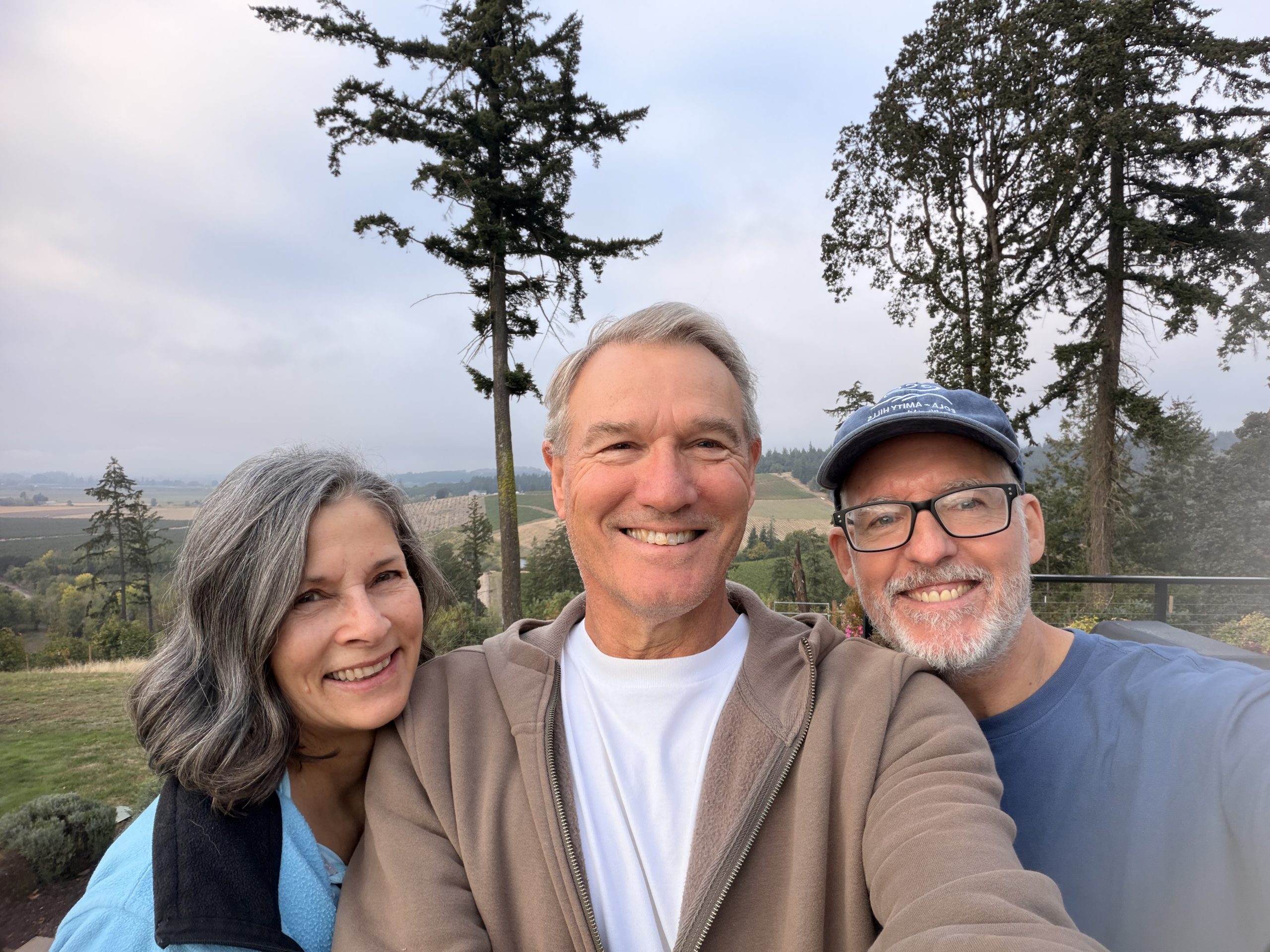
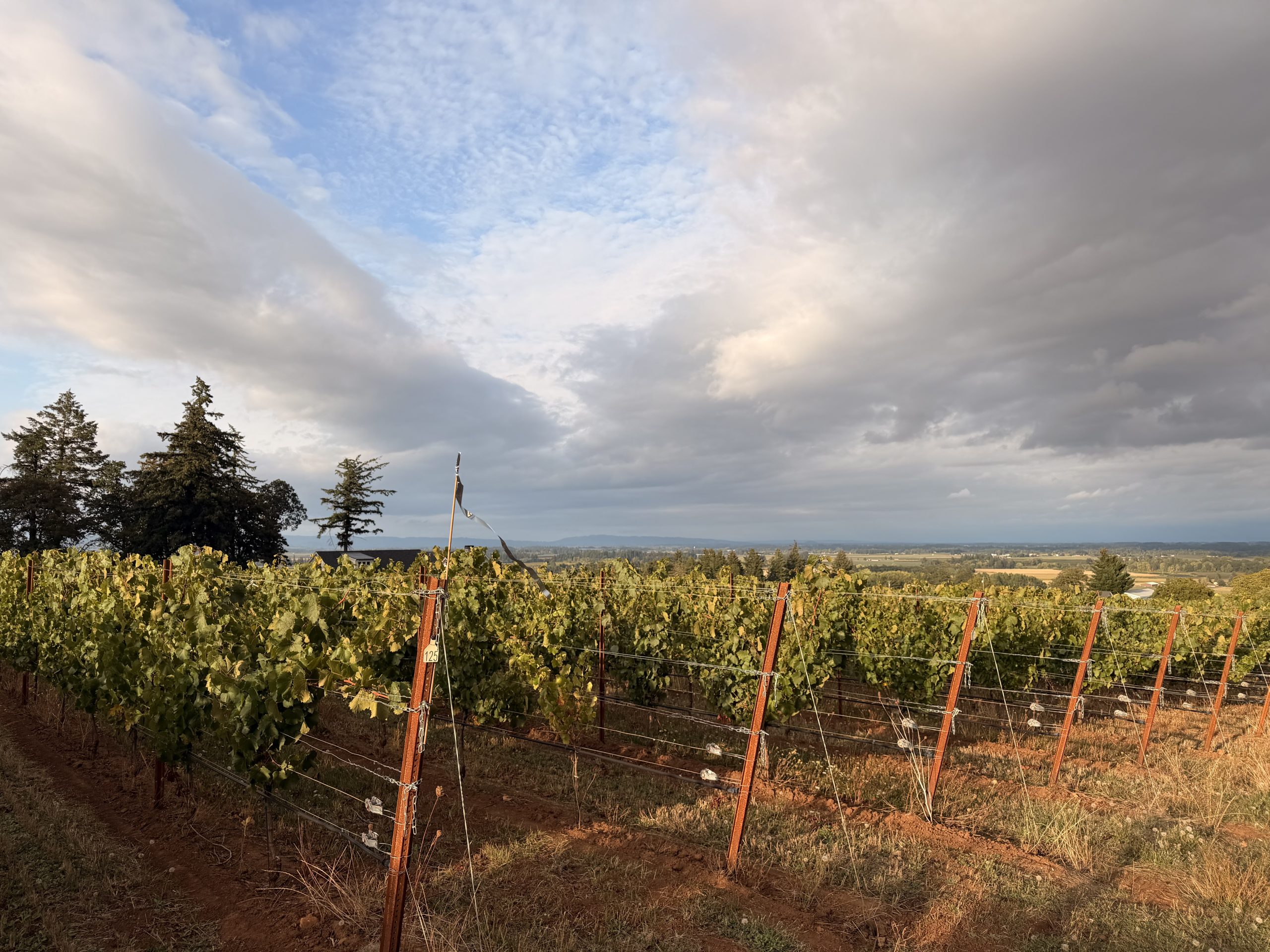
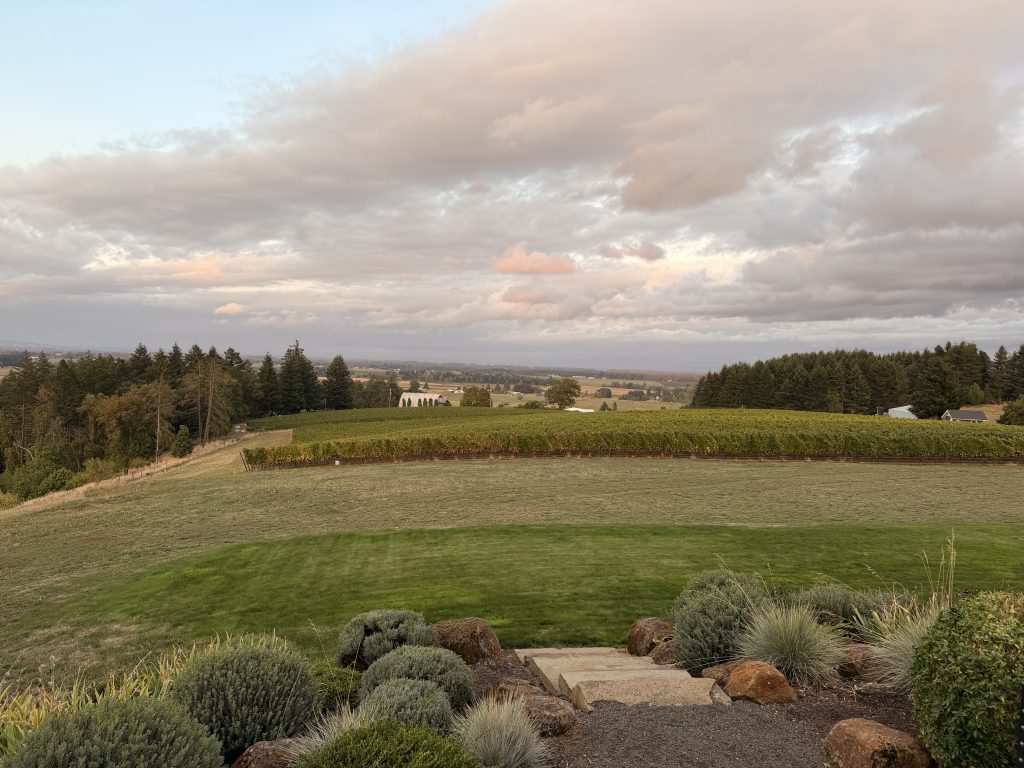
I finally pulled into their vineyard and was greeted by Jeff. After all those years, there was something wonderfully familiar about seeing him again. Of course, we were older, and neither of us looked quite like the person the other remembered from twenty-eight years earlier, but it didn’t take long before the years between us began to disappear. That first night, Jeff treated me to a great dinner, and it was exactly the kind of evening I needed. We sat together, ate, drank, talked, laughed, and began the long process of filling in twenty-eight years of missing chapters. There was no pressure to accomplish anything. No itinerary to follow. No place I needed to be at a certain time. For the first time in a long time, the only thing on the schedule was spending time with an old friend. And that felt pretty good.
Sunday in McMinnville
The next morning, Sunday, September 13th, Jeff and I got up early and attended Mass at his church in McMinnville. It was a quiet and meaningful way to begin the day. I met several of his fellow church friends and had great conversations. Afterward the tone of the morning changed considerably. After a lovely brunch together, Jeff needed to attend a “celebration of life” for a young man he had coached in both baseball and football when he was coaching teams that included his sons, Josh and David. Sadly, the young man had taken his own life, and the loss had hit the community hard.
It was a sobering reminder that communities such as McMinnville are often much more interconnected than they appear from the outside. Jeff wasn’t simply attending a ceremony for someone he had once coached. He was walking into a gathering filled with people who had shared seasons of their lives with this young man and with one another. The loss was being felt by families, coaches, teammates, friends, and people throughout the community.
For Jeff, it was also a reminder of the lasting impact a coach can have on a young person’s life. You may think you’re simply coaching baseball or football, teaching kids how to compete, how to work together, and how to handle winning and losing, but years later those relationships can still matter deeply. That afternoon gave the day a very different character. It was one of those experiences that reminds you that no matter how beautiful the scenery around you may be, life is ultimately about people and the connections we make with them.
Karen Comes Home
Karen returned on Monday, September 14th. She had been away helping her daughter-in-law take care of the children while their son, a Navy SEAL, was away on a training trip. When she arrived back in Amity, the three of us finally had our full reunion. And that’s when the visit really became magical. There was something incredibly comfortable about being around Jeff and Karen. We didn’t need to entertain one another, and we didn’t need to create some elaborate schedule to make the six days worthwhile. We could just hang out, talk, eat, laugh, and enjoy each other’s company.
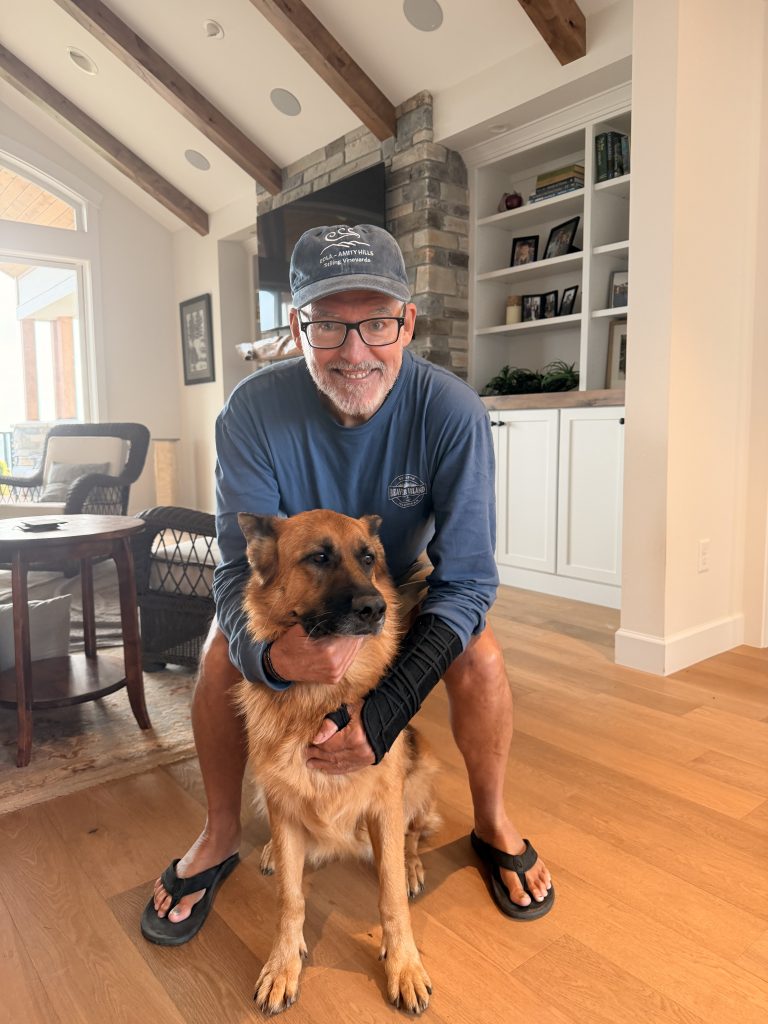
There were three other members of the household who made sure I knew I was a guest, too. Jeff and Karen had a beautiful dog named Kona and two cats, Bonzi and Bandit. Kona wasted very little time deciding that I was worth keeping an eye on. Most mornings, I’d wake up and find Kona stretched out on the floor next to my bed, as though she had appointed herself my overnight security detail. Bonzi took a different approach. Somehow, I would wake up and discover that Bonzi had settled right at my feet on the bed. Apparently, I had been accepted into the household without ever being consulted.
Bandit was another story altogether. He remained considerably more cautious about me. For most of my visit, he seemed perfectly content to maintain a safe and respectable distance. I was beginning to wonder whether I was ever going to win him over. Then, on the morning of September 18th, just as I was getting ready to leave, Bandit suddenly decided it was time to warm up to me. Of course. After six days of patience, Bandit finally chose the morning I was leaving to become my friend. I guess cats have their own ideas about timing.

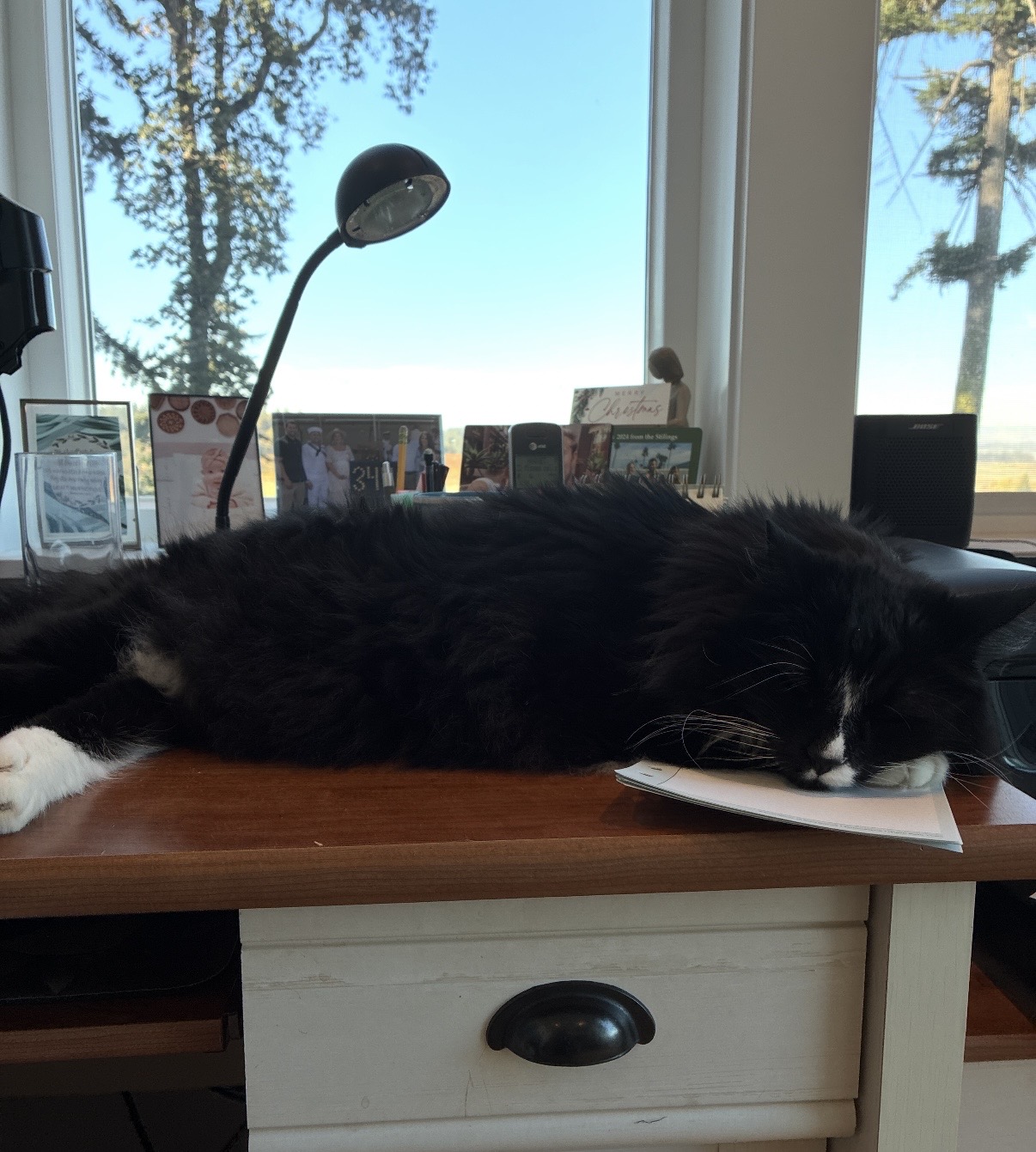
A lot of the best time was spent around meals. Jeff likes to cook, and I was more than happy to be his guest at the dinner table. He also makes what may be the best sandwiches I’ve ever had, so lunch became something I looked forward to every day. After months of making my own meals on a camp stove, eating out of the back of the Hemi, or grabbing something wherever I happened to be, having somebody else make lunch for me was a small luxury that I appreciated more than I probably should admit.

The meals were good, but the conversations were even better. We talked about where our lives had taken us, caught up on mutual friends and acquaintances, laughed about things that had happened decades earlier, and learned about the lives we hadn’t been around to witness. There was no awkwardness that needed to be overcome. After the initial shock of realizing how much time had passed, it simply felt natural. That’s one of the great things about old friendships. You don’t necessarily have to start over. Sometimes you just pick up another chapter.
Time to Slow Down
By this point in the trip, I had become pretty accustomed to moving every couple of days. The Hemi was my transportation, my storage unit, and the Roofnest Sparrow Eye was my bedroom. I had become very efficient at breaking camp, packing everything away, driving to the next destination, and doing it all over again.
Amity was different. For six days, I didn’t have to do any of that. The truck stayed put. The rooftop tent stayed closed. There was no campground reservation to worry about and no question about where I would be sleeping that night. I could sit on a comfortable chair instead of a camping chair. I could enjoy a meal without cooking it. I could talk to somebody without simultaneously checking a map. And, perhaps most importantly, my body finally got a chance to catch up with me. The fractured wrist was still there, of course, and I still had a lingering sense that I had been pushing myself pretty hard. But the head cold that had been hanging on since the Mount Hood area began to fade. I was sleeping better. I was eating better. I was relaxing. I took hot Epsom salt baths. I hadn’t realized how much I needed that. The six days in Amity weren’t particularly dramatic, and that was exactly what made them so enjoyable.

Harvest Day
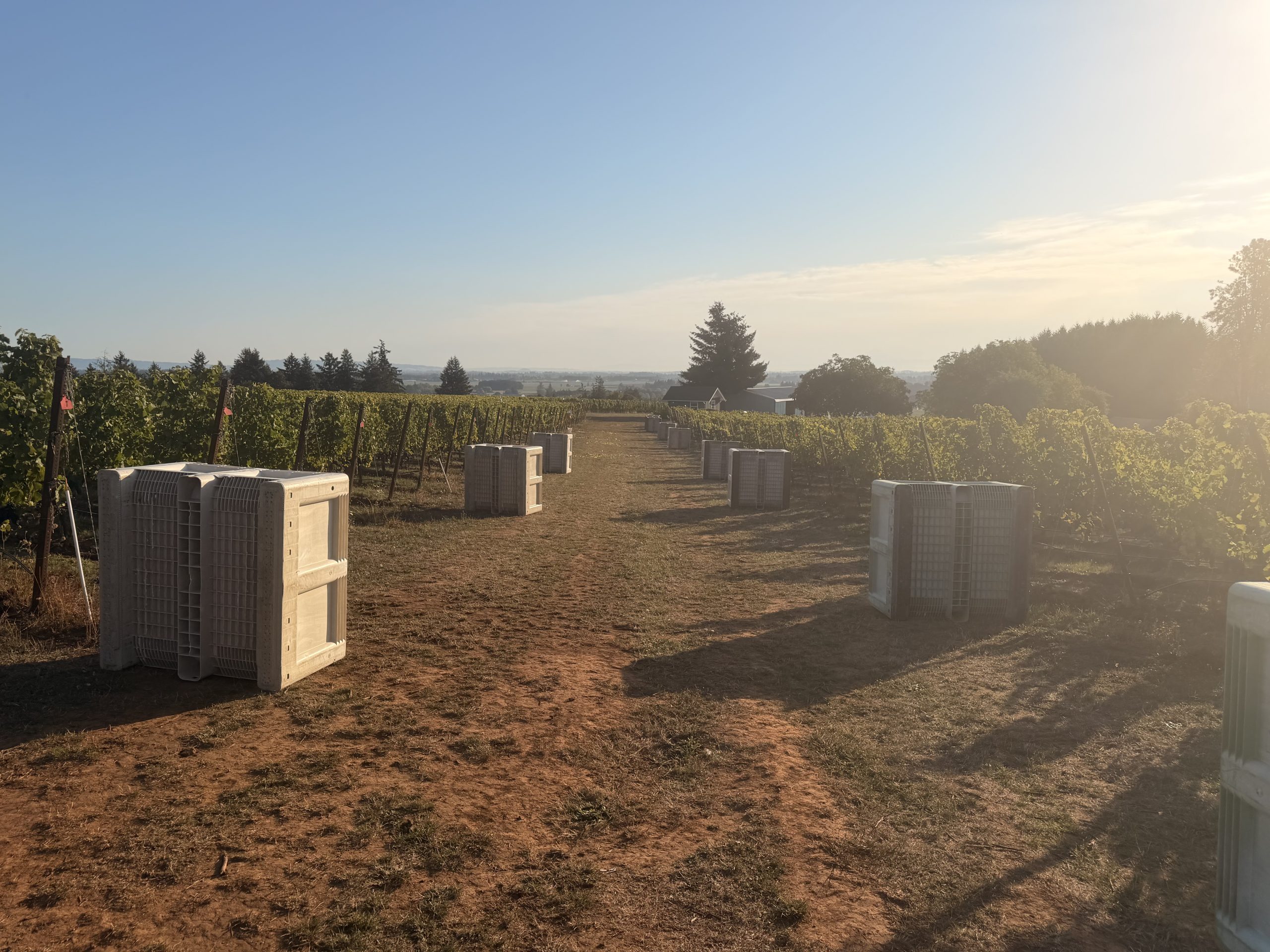
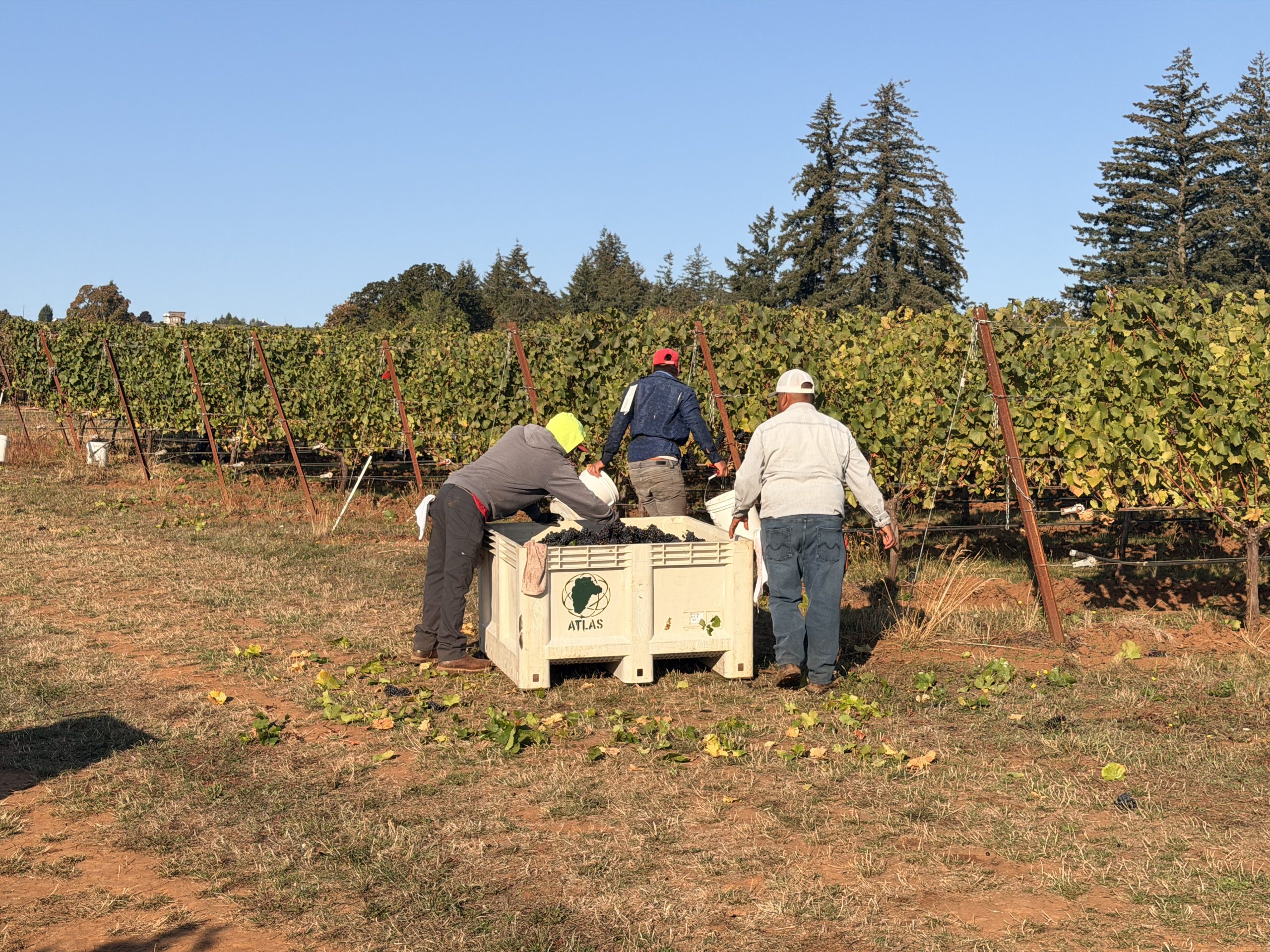
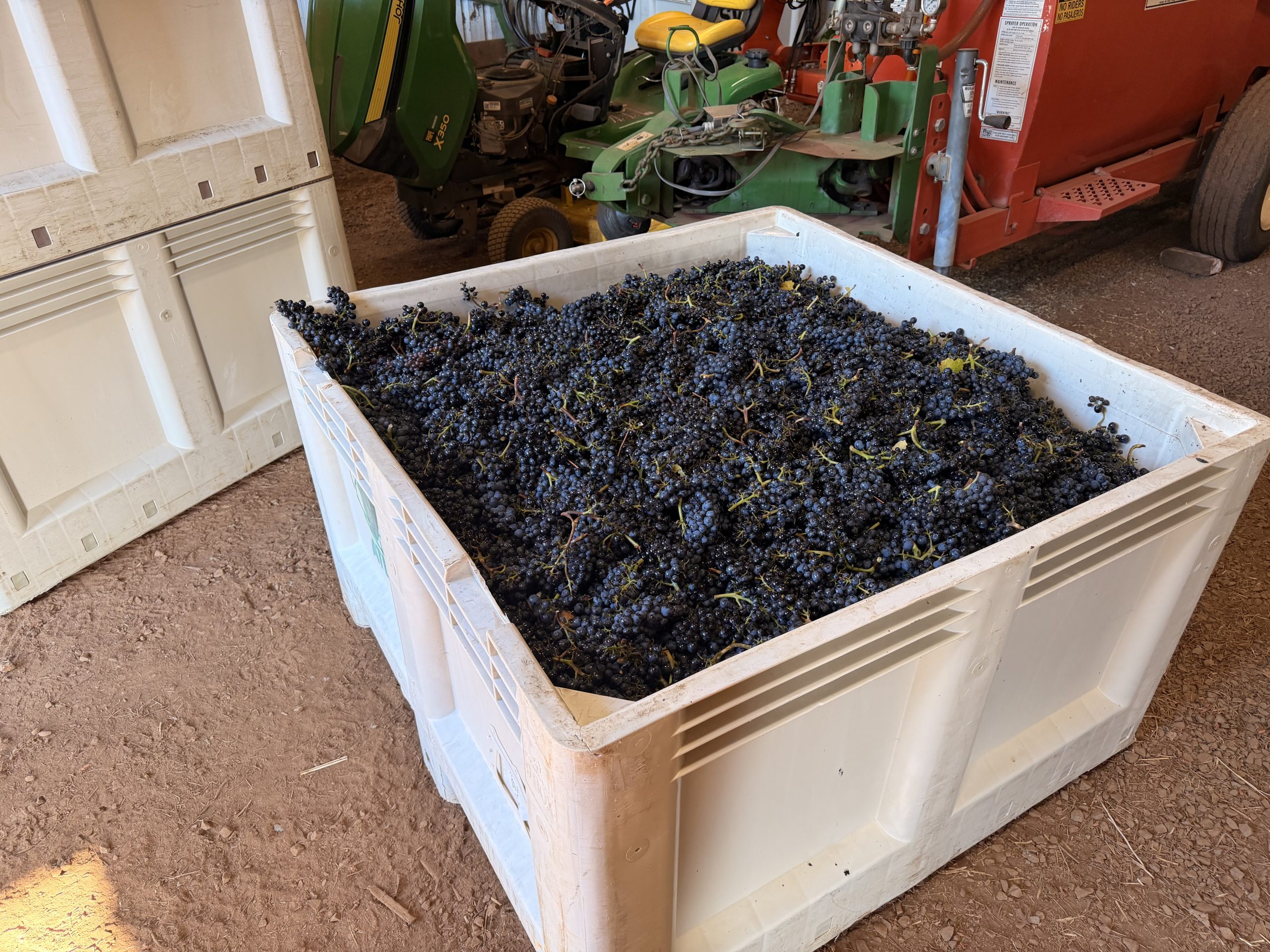
One of the most memorable days came on Thursday, September 17th. Jeff had a crew of roughly twenty-five people coming in to harvest more than seventeen tons of grapes for his wine-making customers. Before the harvest began, we spent some time visiting several of his clients so he could pick up the grape bins they would need. The bins had to be collected and put into place ahead of the harvest, which meant Jeff had plenty to do before the first grape was picked.

Harvest morning began around 5:30 a.m. That is an early start for most people. For a grape harvest, apparently, it’s practically sleeping in. Watching Jeff work that morning gave me another perspective on the world he had built. This wasn’t simply about having a vineyard and making wine. There were customers counting on him, a crew that needed to be organized, equipment that had to be in the right place, grapes that had to be harvested at the right time, and an entire operation that had to come together efficiently.

There was something satisfying about seeing all of that happen.
The quiet of the vineyard was replaced by activity. People were moving, bins were being filled, and what had looked like a peaceful piece of Oregon countryside the day before had suddenly become a very busy workplace. And Jeff was right in the middle of it. After months of seeing the country from behind the wheel of a truck, it was interesting to spend a day watching somebody else’s world operate up close. I wasn’t just visiting Oregon anymore. I was getting a glimpse into Jeff’s life.

One Last Dinner
Thursday evening was also our final night together. We celebrated with a wonderful Mexican dinner at a restaurant in town. By then, the six days had gone by surprisingly fast. We talked about the trip, where I was headed next, and the Oregon coast that was waiting for me after I left Amity. There was a little bit of the inevitable “already?” feeling that comes when you’ve finally gotten comfortable with being together again and suddenly realize it’s almost time to leave. The reunion had somehow managed to feel both completely natural and completely unlikely. Twenty-eight years had passed, and then, in the middle of a 160-day journey around America, our paths crossed again. I was very glad they had.
Leaving Amity
I left the morning of September 18th, but not before making a few final stops in McMinnville.
My first stop was the aerospace museum, now known as the North American Aerospace Museum and formerly the Evergreen Aviation & Space Museum. The centerpiece was the massive Hughes H-4 Hercules, better known as the Spruce Goose.
The airplane is one of those things that is difficult to appreciate until you actually stand next to it. It is enormous—nearly 320 feet across at the wings—and despite its nickname, it wasn’t actually built from spruce. Its structure was made primarily from birch using a wood-lamination process called Duramold. The aircraft was conceived during World War II when the Allies were desperate for a way to move troops and materials across the Atlantic while German submarines were sinking shipping. Shipbuilder Henry Kaiser came up with the basic concept and brought Howard Hughes into the project.
The story became legendary because almost everything about the airplane was over the top. It was enormous, extremely expensive, built under wartime material restrictions, and completed only after the war was already over. On November 2, 1947, Hughes himself was at the controls when the flying boat unexpectedly lifted off Long Beach Harbor during a taxi test. It flew for roughly half a mile, about 25 feet above the water, and was airborne for approximately thirty seconds. It would never fly again.
Afterward, Hughes kept the airplane maintained in a climate-controlled hangar until his death in 1976. It was eventually displayed near the Queen Mary in Long Beach beginning in 1983, but when the funding and ownership situation there changed, the gigantic airplane needed a new home. In 1992, the group that would become the museum in McMinnville won the proposal to preserve it. The aircraft was disassembled and transported by barge up the Pacific Coast and through the Columbia and Willamette Rivers to Oregon. Because of the height of the bridges and the size of the airplane’s components, the pieces had to wait in Portland until water levels allowed the journey to continue. In February 1993, the final pieces made the last 7.5 miles by truck to McMinnville. The airplane was eventually reassembled and became the centerpiece of the museum that opened in 2001.
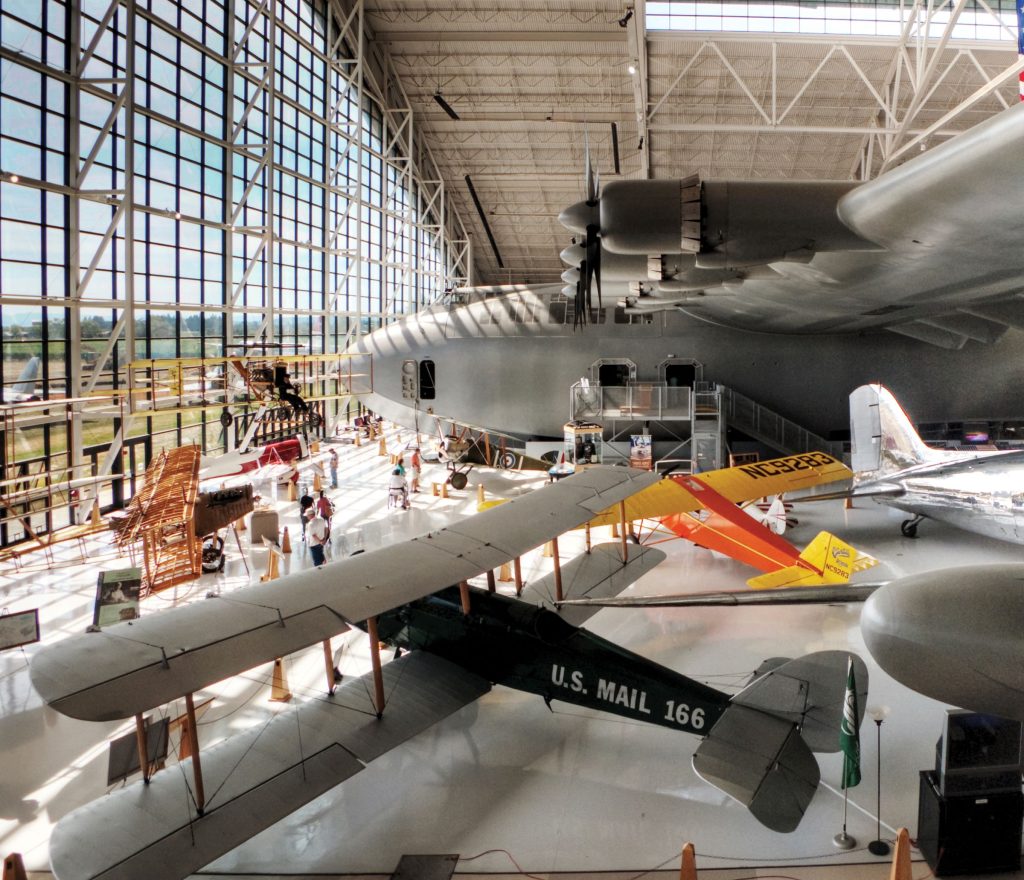
Standing underneath that enormous wing, I couldn’t help thinking about the sheer audacity of the whole project. Someone actually looked at the limitations of wartime transportation and thought, essentially, “Let’s build an airplane the size of a football field out of wood.” And then they actually did it.
Interestingly, I had once spent New Year’s Eve with a group of lovely friends dancing under the Spruce Goose to the Texas Blues Band, The Fabulous Thunderbirds. This was right adjacent to the Queen Mary where my friends and I were staying and celebrating New Years Eve together. But I digress. This is an entirely different story.
My second stop was a local organic grocery store, where I stocked up on food and supplies for the next part of the trip. After six days of being taken care of by Jeff and Karen, I needed to switch gears again and make sure I was properly provisioned for the Oregon coast. It was a practical stop, but an important one. The refrigerator was going to be full, the pantry was restocked, and I wouldn’t have to worry about finding groceries for a while.
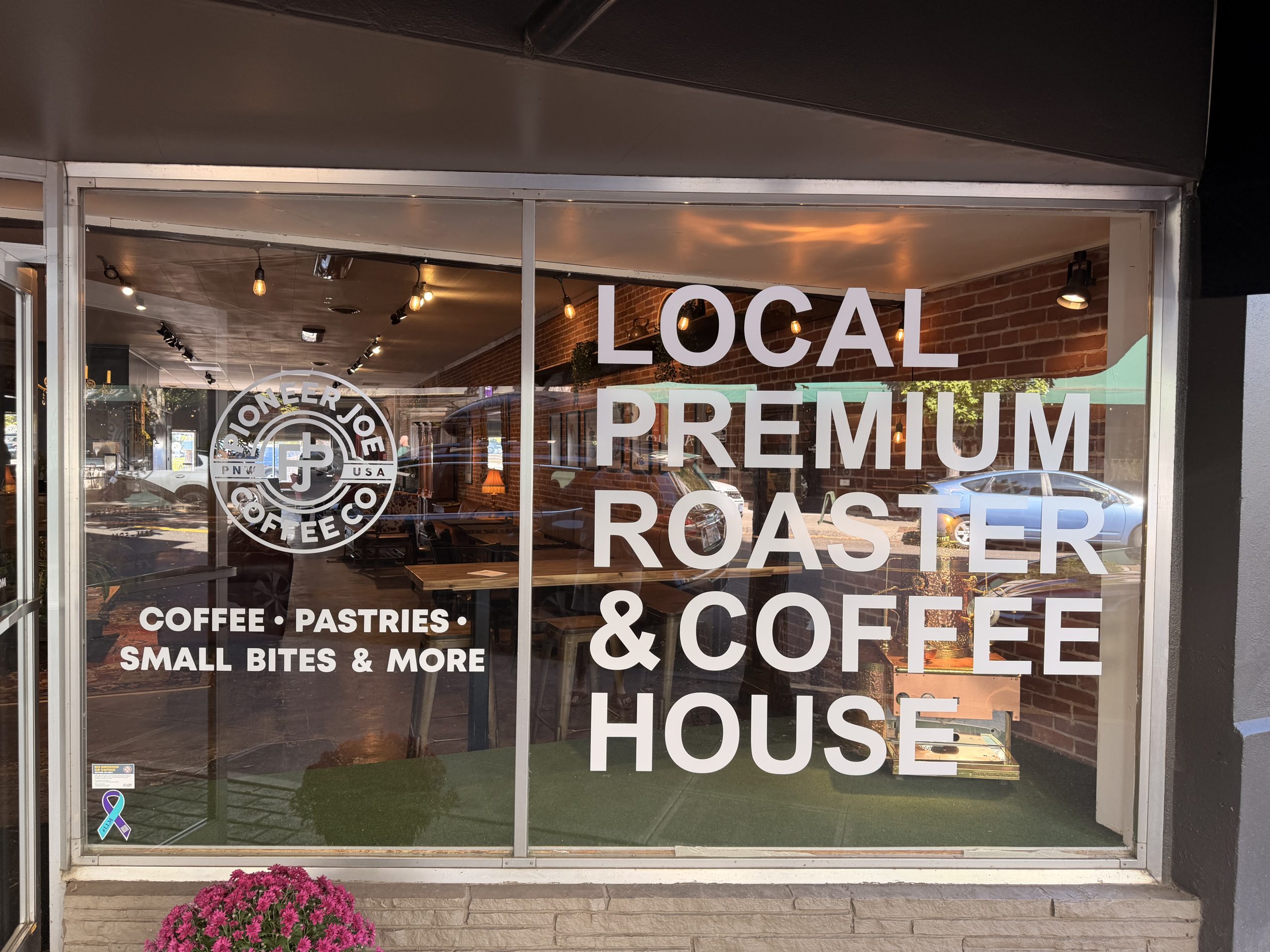
My last stop before leaving McMinnville was Pioneer Joe Coffee Company in downtown McMinnville.
As it turned out, I picked a pretty interesting time to stop there. Pioneer Joe had only recently opened its McMinnville location on Third Street, taking over a space with its own coffee-shop history. One local writer described the earlier Cornerstone Coffee as something of a community living room, and Pioneer Joe was already beginning to fill that role again—another place where people could sit, talk, work, and spend some time together over coffee.
That made it a perfect place for my final three hours in McMinnville.
I ordered coffee, found a place to settle in, and opened my laptop.
For the next three hours, I wrote.
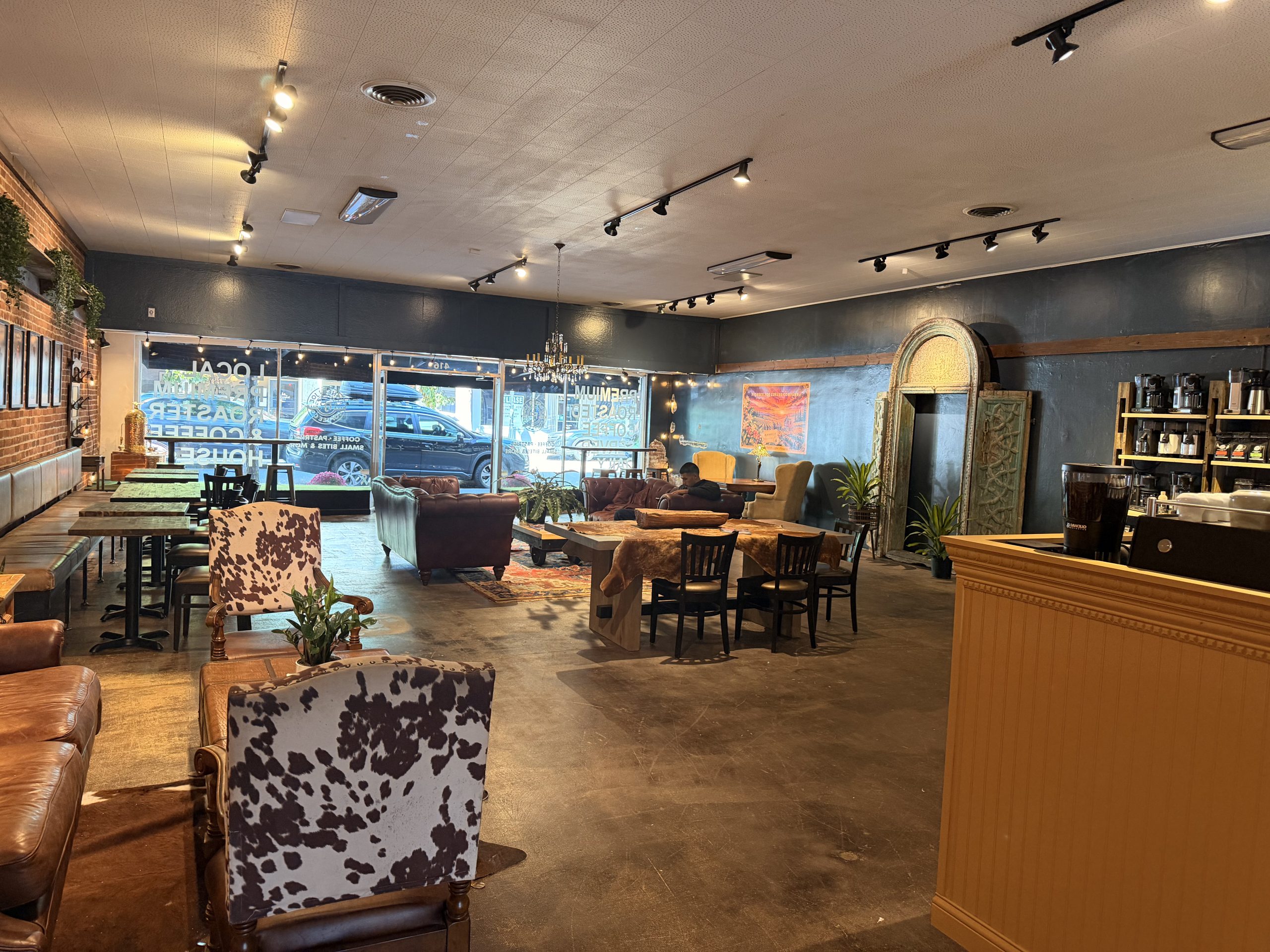
I worked on the blog, organized my thoughts, posted some of the recent adventures, and tried to make sense of the enormous amount of material that had accumulated during the trip. By then, the road had given me more stories than I could possibly remember without writing them down. Sitting in a downtown coffee shop with a good cup of coffee and a laptop in front of me felt like a fitting way to close out my time in the Willamette Valley.
And somewhere during those three hours, I realized just how much I had needed these six days.
When I had arrived on September 12th, I was carrying a broken wrist, a head cold, and several months of accumulated fatigue. I left Amity with the wrist still needing time to heal, but the rest of me felt considerably better. I was rested. My head cold was gone. My food supplies were replenished. The truck was ready.
Most of all, I felt refreshed.
The time with Jeff and Karen had given me something that a campsite, a national park, or a scenic overlook couldn’t provide. It reminded me of the importance of stopping long enough to reconnect with people, to share meals, to laugh, to listen, and simply to enjoy being somewhere without needing to accomplish anything.
I had come to Amity expecting a reunion.
I left with something more.
I left with six days of memories that could never have been planned into the original itinerary, and with the unmistakable feeling that twenty-eight years hadn’t been nearly enough to erase an old friendship.
Now it was time for something completely different.
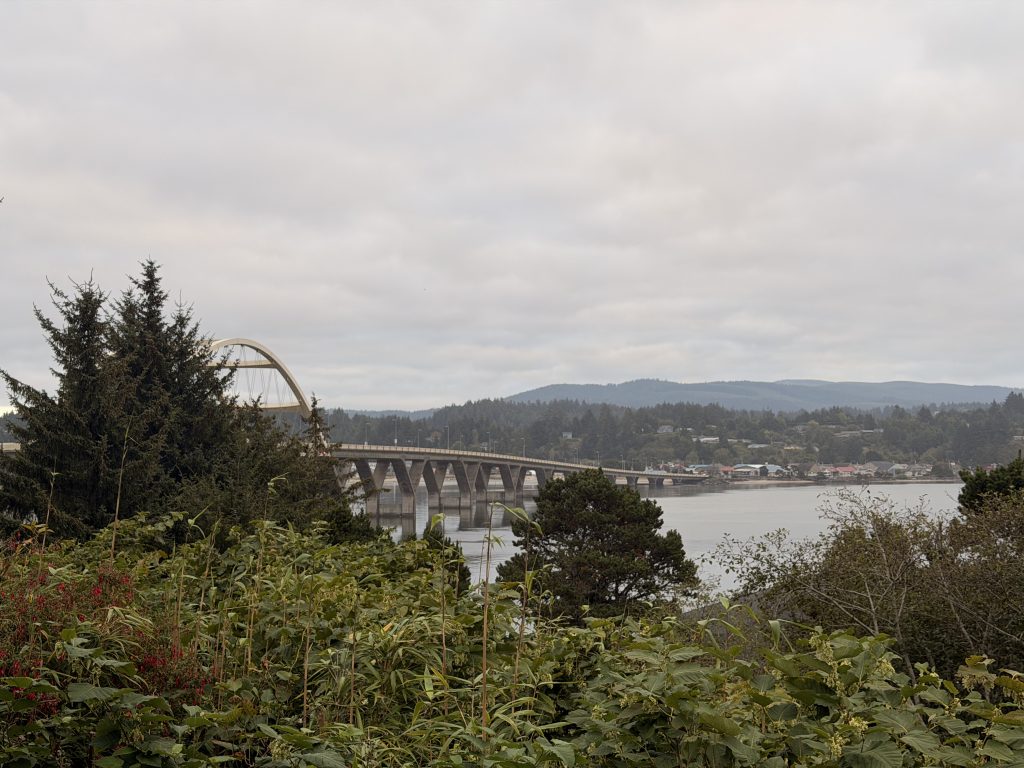
I pointed the Hemi west toward the rugged Oregon coast.

The head cold was gone, the refrigerator was full, the coffee was working, and I was ready for the next chapter.