

An Oregon Coast Adventure
There is a moment on a road trip when you feel the landscape changing and something inside you changes with it. Leaving Amity, Karen and Jeff’s vineyard estate, and the quaint town of McMinnville behind, I felt that familiar spark return. The Hemi was pointed west, the Pacific was waiting, and the road ahead promised the kind of adventure that reminds you why you set out in the first place. My friend Sara had helped set the course. You may remember her from my earlier stories about New Orleans and Fargo, North Dakota. Having lived in Portland for years and traveled the Oregon coast frequently, she knew where I needed to go. Her advice was to reach the coast at Newport and work my way south toward Florence over the next couple of days. I followed her lead.
The drive was a gradual unveiling. Farmland rolled across the hills, the countryside opened toward the horizon, and then the terrain grew increasingly dramatic. Rocky outcroppings appeared along the coastline, and the Pacific began to assert itself. This was the Oregon coast I had been anticipating: rugged, untamed, and beautifully indifferent to the world beyond its shores.
There was practical work to do before I could fully surrender to the adventure. I had spent much of the day preparing for the weeks of camping ahead, and the first order of business was finding a place to park the truck, set up camp, and settle in. I found the Waldport/Newport KOA Journey, a clean, well-located campground that turned out to be an excellent choice. Friday arrivals had limited my options, but I was happy with my find. After getting settled, I wandered around the grounds and stopped to admire one of Oregon’s beautiful steel bridges spanning the coastal waterways. https://koa.com/campgrounds/waldport/?utm_source=google&utm_medium=organic&utm_campaign=gbp

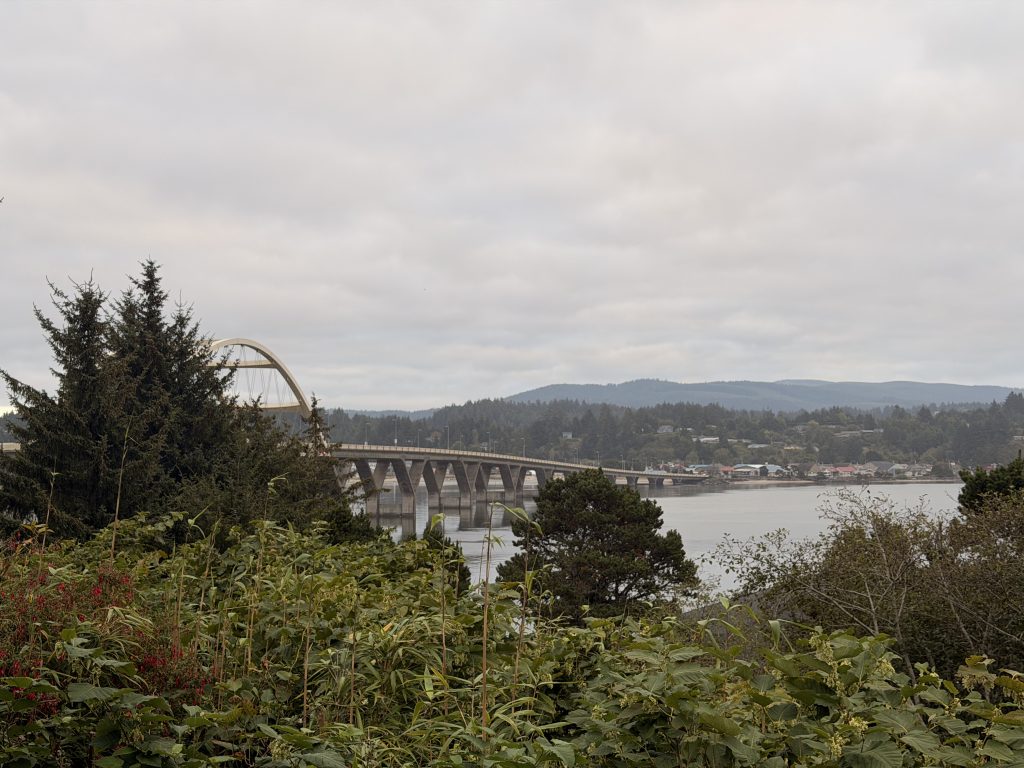
Back at camp, the evening belonged to me. Fresh organic food was ready to be transformed into dinner, and a beautiful bottle of red wine was waiting for its moment. I cooked, poured a couple of glasses, and put on some music at just the right volume—enough to create my own little world without imposing it on the neighbors. There was no grand restaurant, no elaborate itinerary, and no need to be anywhere else. Just good food, music, a glass of wine, and the satisfaction of having arrived somewhere beautiful under my own power.
I slept like a baby. Sometimes the simplest pleasures are the ones that stay with you longest. After days of travel and preparation, sleeping in the fresh coastal air felt like a return to something elemental. The Pacific was nearby, the next day’s discoveries were waiting, and for the moment, everything was right with the world.
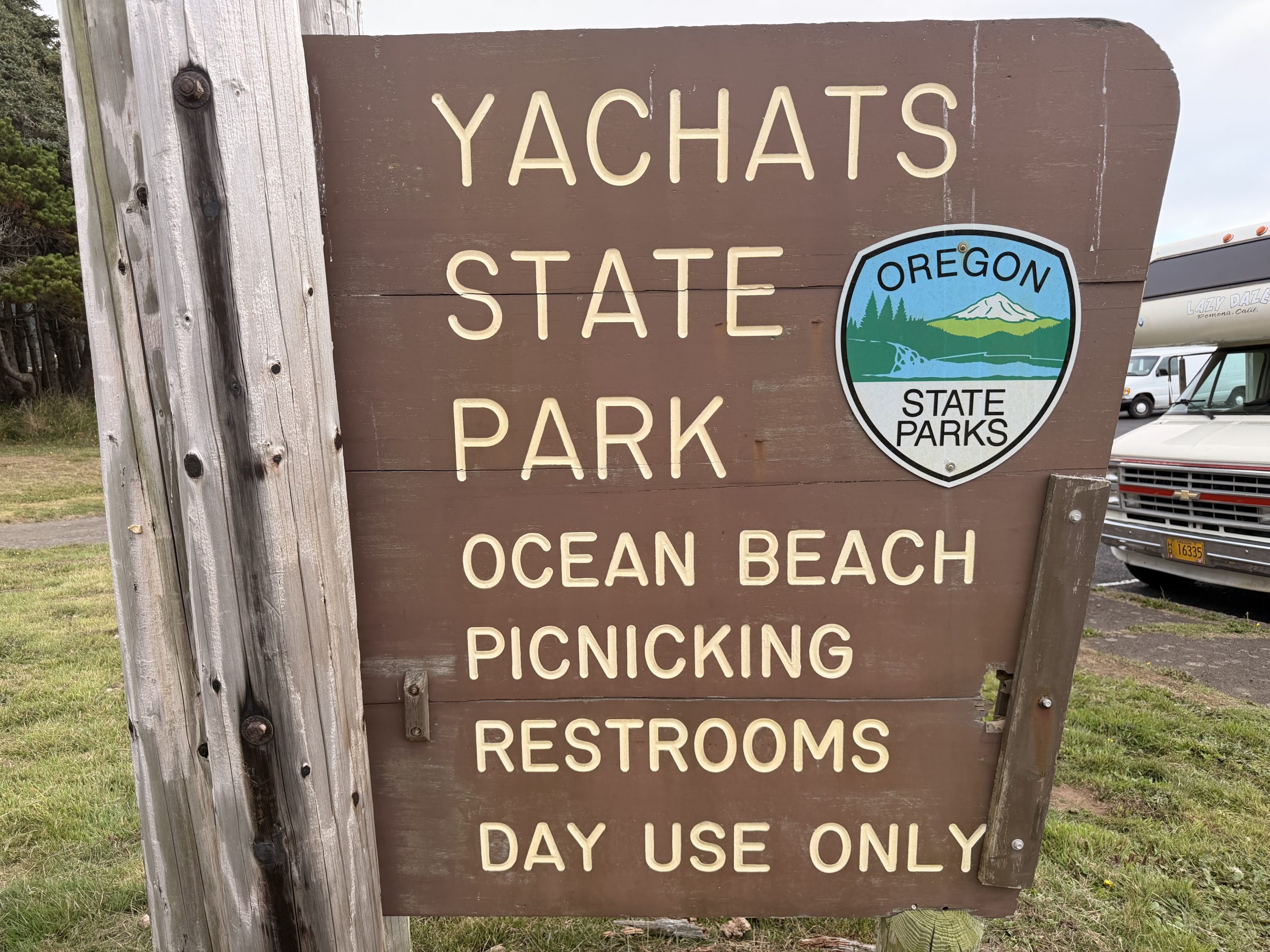
Yachats: A Small Town With a Big Personalityhttps://www.yachats.org/
The next morning, I continued south along Highway 101 toward Yachats, following the route Sara had recommended. The distance was not great, but the road itself was part of the experience. Forest pressed close on one side, the ocean appeared and disappeared on the other, and every turn seemed to offer another glimpse of the coastline. Sara had recommended Yachats, as had Karen and Jeff and several others I had met. When that many people independently point you toward the same little coastal town, you pay attention.
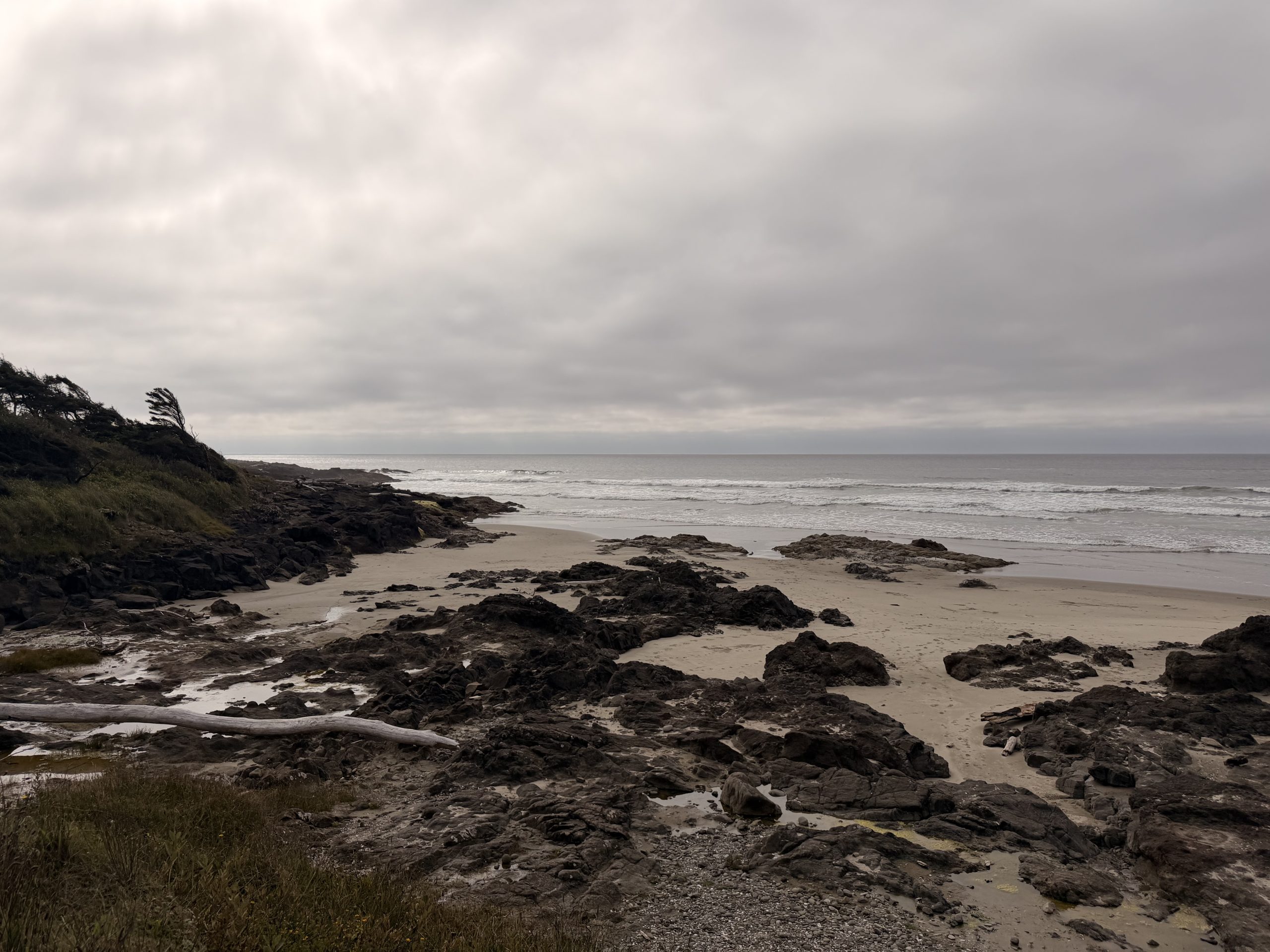
Yachats did not disappoint. Pronounced YAH-hots, this small coastal community has a character all its own. The shoreline here is not defined by endless stretches of soft sand. Instead, dark volcanic rock, tide pools, wave-carved crevices, and rugged basalt ledges give the coast a wilder personality. The town sits between the forested slopes of the Coast Range and the Pacific, creating a setting where the landscape seems to take center stage.

I found a local diner and coffee shop, ordered breakfast, and settled in with a cup of coffee. It was the perfect place to pause, take stock of the day, and map out the next leg of the adventure.

There is something special about small coastal towns: they invite you to slow down without making you feel that you are missing anything. I also stopped at Luna Sea Fish House, another local destination on my itinerary. The combination of a welcoming little town, good food, coffee, and the promise of a spectacular coastline just down the road made for a wonderful start to the day. Yachats gave me more than breakfast and a pleasant stop. It established the rhythm for the day ahead: move south, follow the shoreline, and let the coast reveal itself one landmark at a time. With that in mind, I climbed back into the Hemi and continued toward Cape Perpetua.
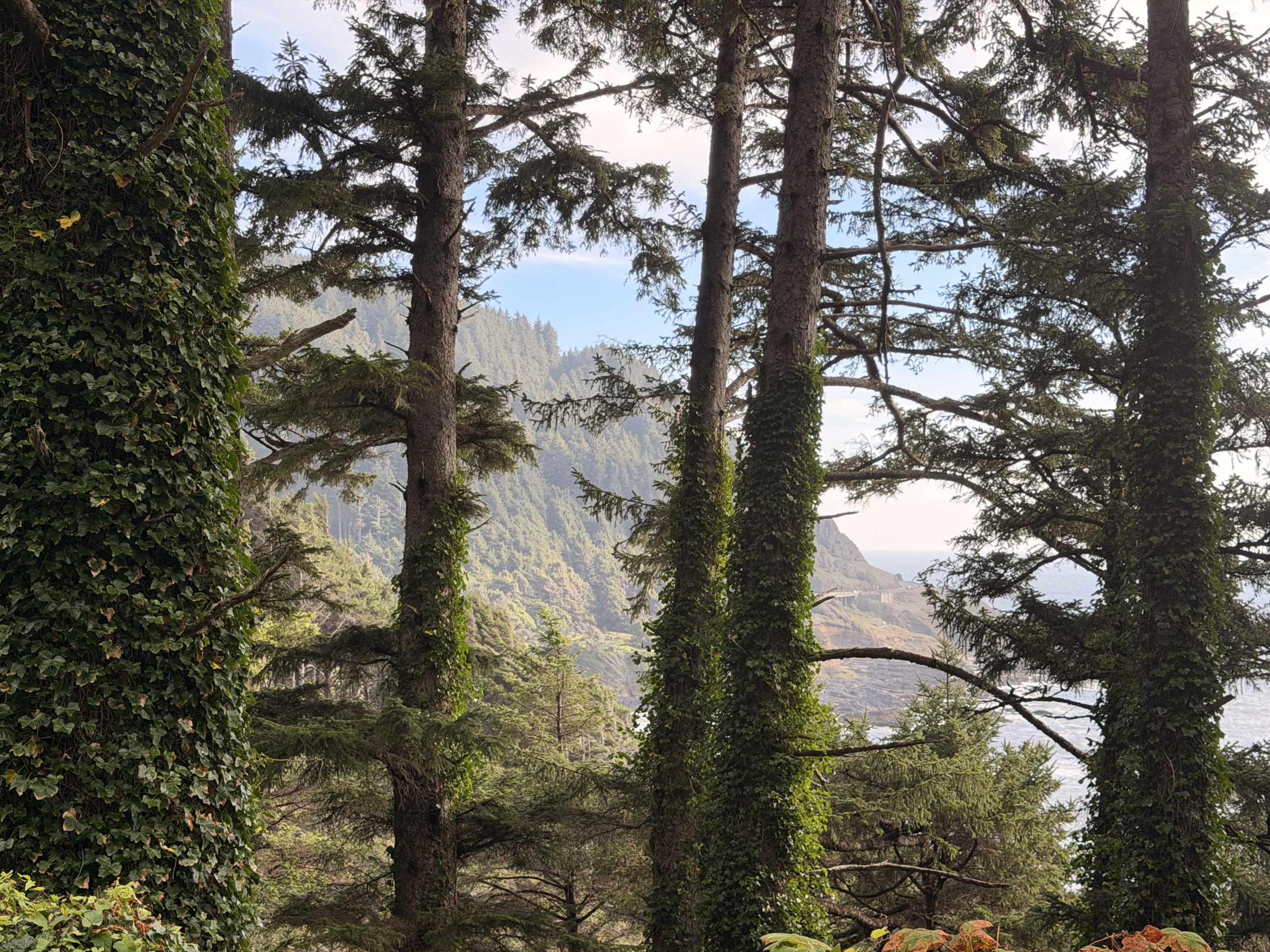
Cape Perpetua: Where the Earth Meets the Pacific
Just south of Yachats lies Cape Perpetua, one of the most remarkable stretches of the central Oregon coast. The short drive from town brought me into a landscape shaped by volcanic rock, relentless surf, and centuries of erosion. Forested slopes descend toward dark basalt cliffs, and the ocean has carved the shoreline into an extraordinary collection of chasms, inlets, and wave-battered formations. Cape Perpetua is also a place where the sheer scale of the Pacific becomes impossible to ignore. The sea can appear almost peaceful from a distance, but at the rocky shoreline, its energy is unmistakable. Waves surge into narrow openings, explode against the stone, and send plumes of white spray into the air.
https://visittheoregoncoast.com/cities/yachats/activities/cape-perpetua-scenic-area/
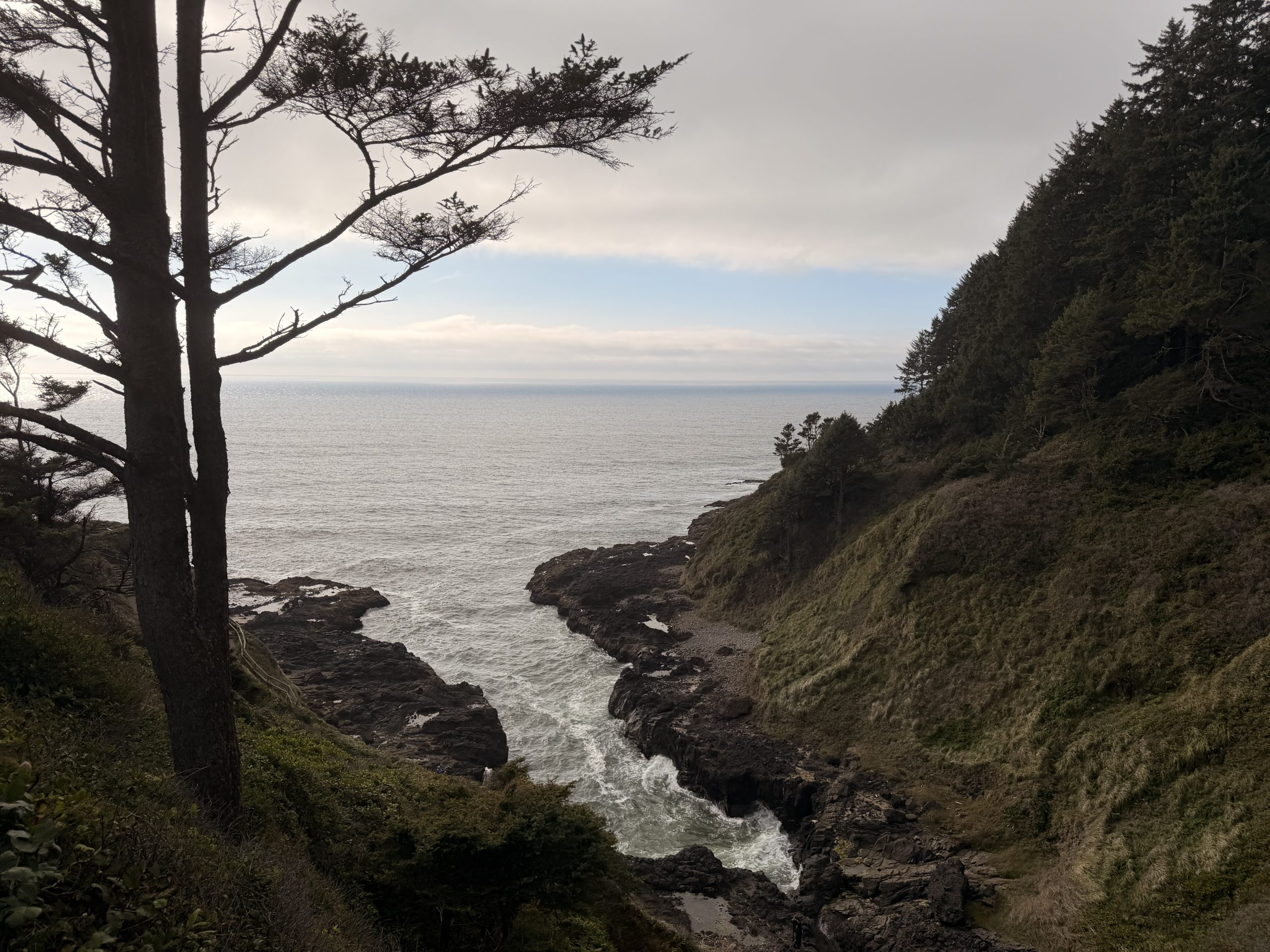
For a traveler who enjoys photography, this is a place that rewards patience and curiosity. The changing light, dark rock, whitewater, and shifting clouds offer a seemingly endless range of compositions. The area also has a remarkable elevated viewpoint. A paved road climbs to approximately 800 feet above the ocean, making it the highest point on the Oregon coast that can be reached by car. On a clear day, the views extend for miles along the coastline. I could understand why this stretch of the coast had earned such a reputation. It wasn’t simply beautiful; it was dramatic, geological, and alive with the power of the sea. And within that larger landscape was one of the coast’s most famous natural spectacles.

Thor’s Well: The Pacific’s Natural Spectacle
https://www.yachatsoregon.org/295/Thors-Well
Among the most intriguing sights in the Cape Perpetua area is Thor’s Well, a natural formation that seems almost too extraordinary to be real. At first glance, it resembles a giant hole in the ocean floor, as if the Pacific has sprung a leak. Water pours into the opening, disappears, and then erupts upward in a burst of spray. When the incoming waves arrive in the right sequence, the effect can look like an enormous natural drain swallowing the sea. The science behind the spectacle is fascinating. Thor’s Well is believed to have formed from a sea cave whose roof eventually collapsed. Openings in the rock allow the ocean to surge into the cavity and drain back out, creating the illusion of a bottomless hole. Although it is only around 20 feet deep, the combination of wave action, spray, and dark volcanic rock makes it appear far more mysterious.
For photographers, the attraction is obvious. The contrast between the dark rock and white water creates striking images, especially when the waves arrive in rapid succession. The best-known views are often captured around high tide, when the water is most active.
But Thor’s Well demands respect. The surrounding rocks can be slippery, sneaker waves can reach much farther than expected, and the ocean’s power is not always obvious until it is too late. The sensible way to appreciate this remarkable feature is from the designated viewing area, keeping well back from the water’s edge. It is one of those places that reminds you that nature does not need to be tamed or staged to be spectacular. Sometimes, all you need to do is stop, observe, and appreciate the show.
After taking in the drama of Cape Perpetua and Thor’s Well, I was ready for a change of pace. The road continued south, but the next stop would trade volcanic rock and crashing surf for a quieter, more secluded stretch of sand.
Hobbit Beach: A Hidden-Feeling Coastal Escape
https://oregondiscovery.com/hobbit-beach
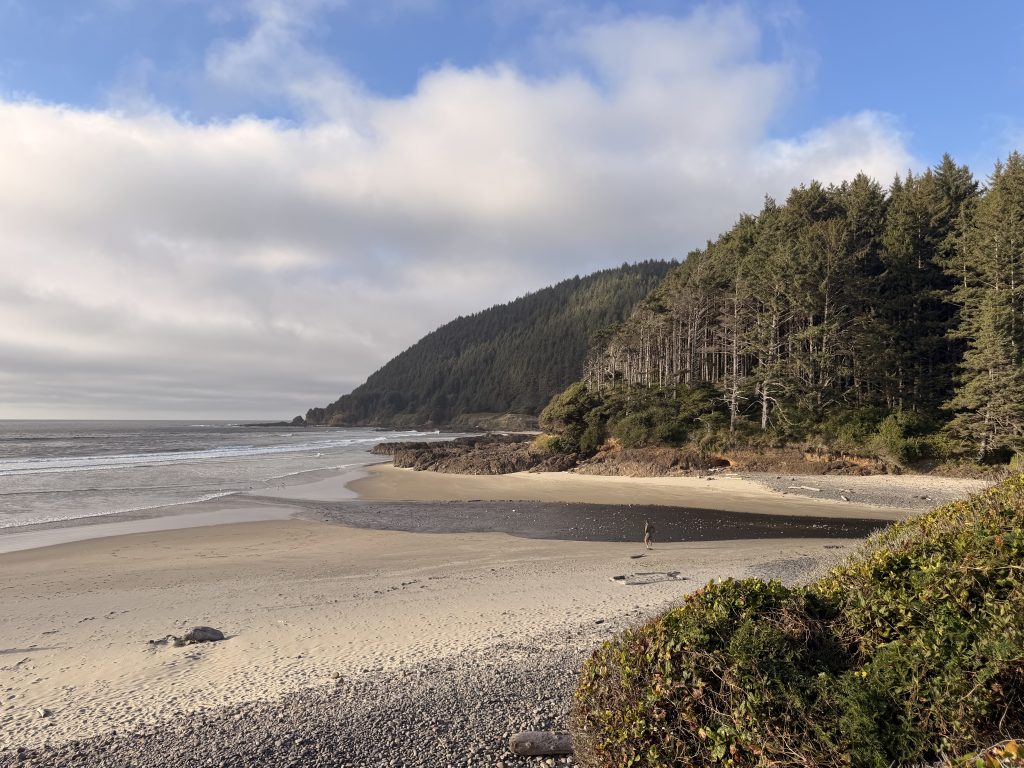
Continuing south, I made my way to Hobbit Beach. There is something about the name that immediately suggests a tucked-away world, a place separated from the ordinary rhythms of the highway. The Oregon coast is full of these little discoveries: stretches of shoreline that feel wonderfully removed from everything else, even when they are only a short distance from the main road. Hobbit Beach is reached by a forested approach, making the transition from woodland to shoreline part of the experience. The coastal forest gives way to sand, open sky, and the sound of the Pacific.
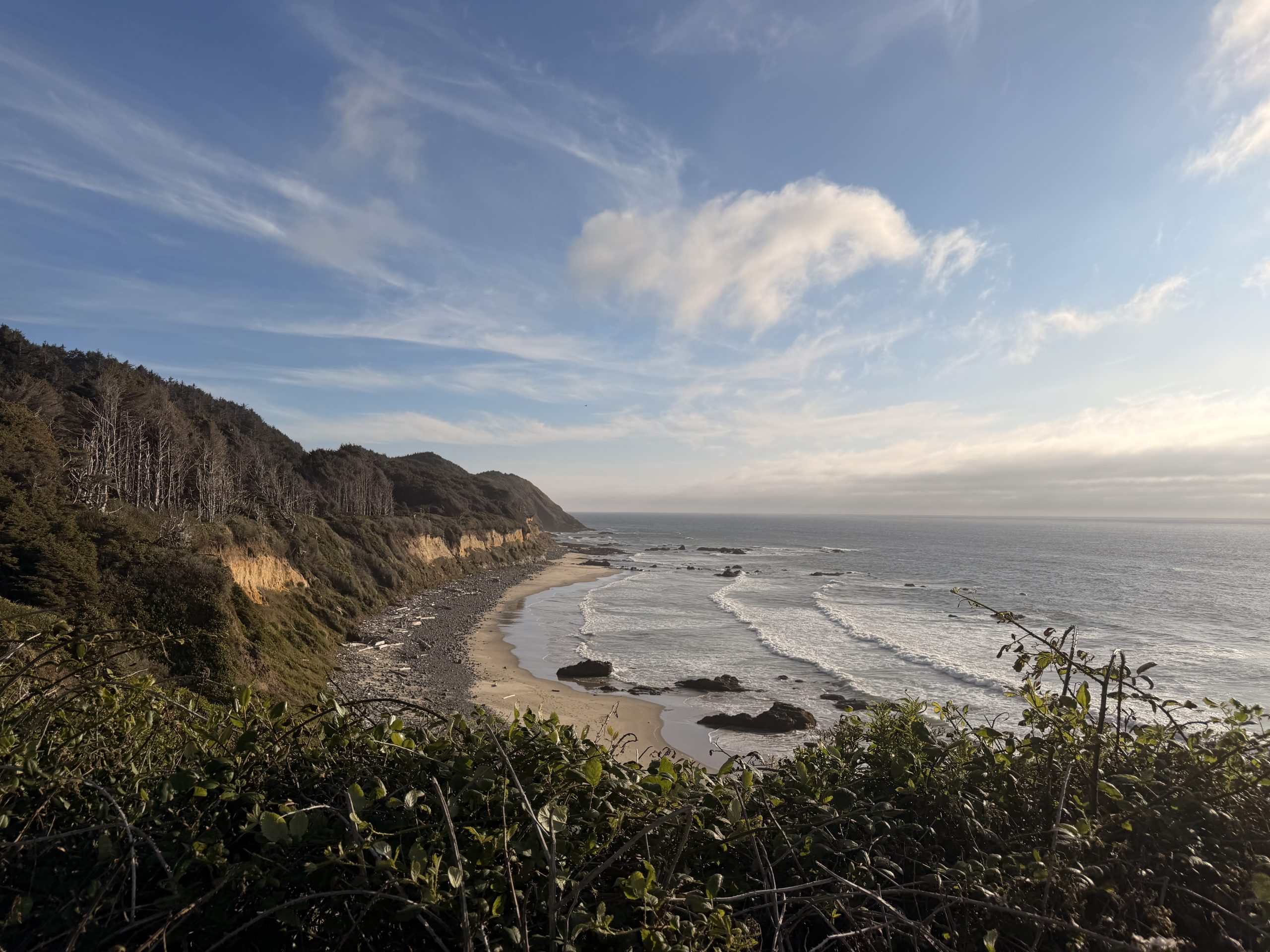
The beach itself offers a different mood from the rocky formations around Cape Perpetua—a chance to slow down, stretch your legs, breathe the salty air, and take in the immense horizon. It is easy to see why beaches like this become memorable stops on a road trip. They do not necessarily require a major hike or a complicated plan. They simply reward the decision to get out of the truck and explore. For me, that is one of the great pleasures of traveling the coast. The destinations are wonderful, but so is the freedom to discover something unexpected along the way. Hobbit Beach reminded me that the journey south was not merely a sequence of famous landmarks. It was a gradual movement through changing landscapes and moods. From there, the road carried me toward one of the coast’s most enduring symbols: Heceta Head Lighthouse.

Heceta Head Lighthouse: A Beacon Above the Waves
Another highlight was Heceta Head Lighthouse, one of the most recognizable landmarks on the Oregon coast. The lighthouse occupies a spectacular position on a rocky headland, with its white tower standing above the Pacific and the surrounding forest. It is difficult to imagine a more dramatic setting for a lighthouse: steep green slopes, rocky shoreline, and open ocean stretching toward the horizon. The light first shone on March 30, 1894. The tower rises 56 feet, and its beacon sits approximately 206 feet above the ocean. Today, the light can be seen as far as 21 miles offshore, making it the strongest lighthouse beacon on the Oregon coast.
https://traveloregon.com/things-to-do/culture-history/lighthouses/heceta-head-lighthouse/
Those numbers tell only part of the story. A lighthouse is ultimately a structure built to provide reassurance in a dangerous environment. For generations of mariners navigating the Pacific’s rocky coastline, that light has represented guidance through darkness, fog, and treacherous waters. The headland also carries a human history. The assistant lightkeeper’s house, built in 1893, survives as a reminder of the isolated community that once supported the station. Lightkeepers and their families lived in a setting that was beautiful but demanding, far removed from many of the conveniences we take for granted today.
Visitors can reach the lighthouse by a half-mile trail that climbs approximately 150 feet from the parking area, passing the historic keeper’s house along the way. The viewpoint is also known for opportunities to spot migrating whales, sea lions, and coastal birds. Standing in a place like this, you cannot help but think about the people who lived and worked here more than a century ago. They watched the same storms roll across the Pacific and the same waves crash against the rocks, but their lives revolved around keeping a light burning for others. For anyone traveling the Oregon coast, Heceta Head is more than a beautiful photograph. It is a meeting point of landscape, engineering, maritime history, and human perseverance.

By the time I left Heceta Head, the day had taken me from the intimate streets of Yachats through the raw power of Cape Perpetua, the strange beauty of Thor’s Well, the quiet openness of Hobbit Beach, and finally to a lighthouse that had guided travelers along this coast for generations. Florence was now close, and I wanted a place nearby where I could end the day, rest, and make an easy start the following morning.

Finding Camp Near Florence
After so many stops, the day seemed to fly by. The coastline had delivered one memorable sight after another, but eventually it was time to find a campground. I wanted to be somewhere near Florence so that my Sunday morning departure would be easier. After a full day of exploring, there was something comforting about returning to the familiar routine of finding a campsite, preparing dinner, and settling in for the night.
https://stateparks.oregon.gov/index.cfm?do=park.profile&parkId=95
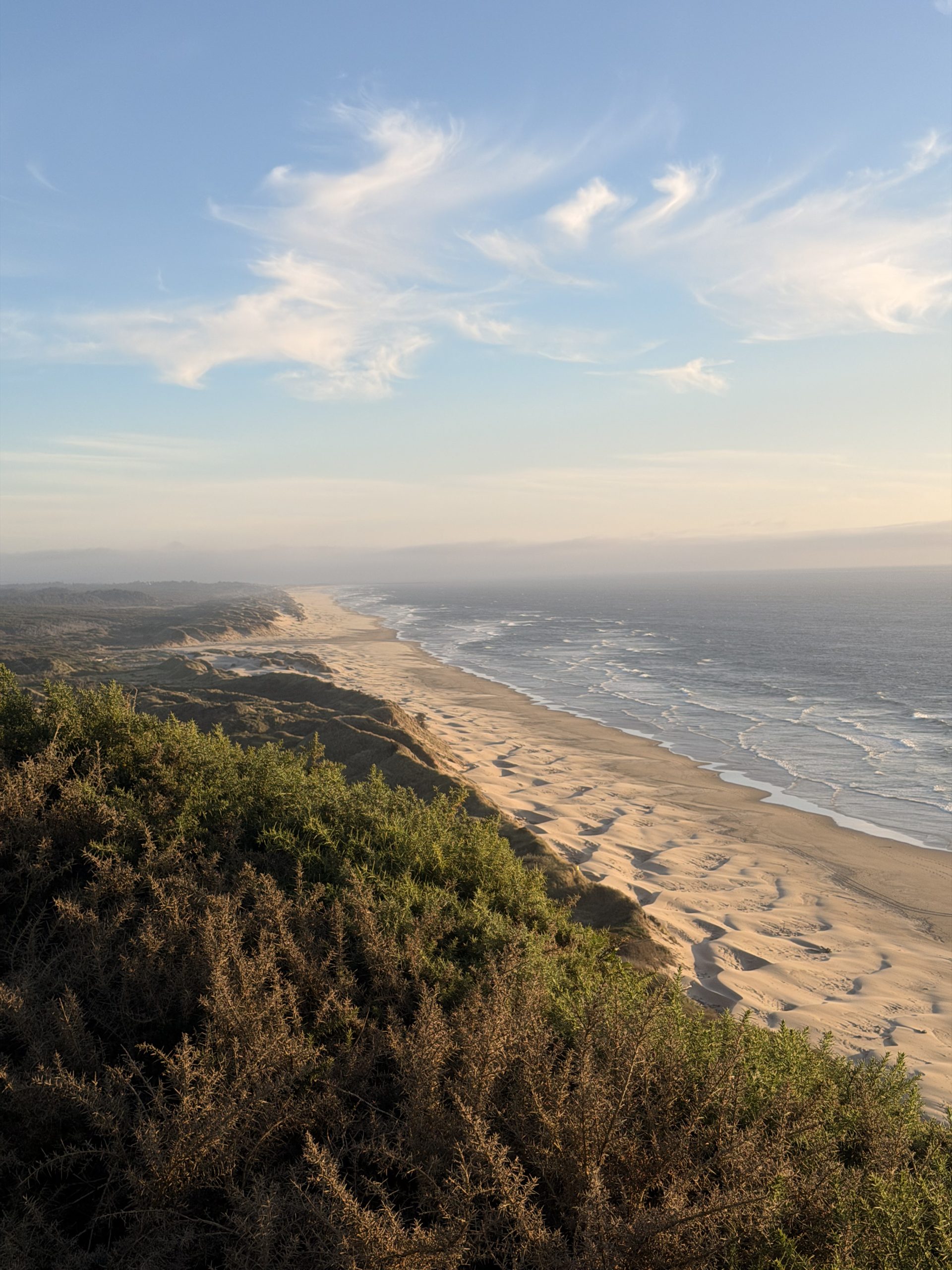
My destination was Jessie M. Honeyman Memorial State Park, a beautiful coastal park just south of Florence. Honeyman has a different character from the exposed headlands and rocky beaches I had explored during the day. Rather than sitting directly on the ocean, the park is tucked among coastal dunes and forest, creating a landscape of freshwater lakes, sandy slopes, and wooded camping areas. It is part of the broader Oregon Dunes region, where wind and time have sculpted enormous hills of sand along the coast. The park lies approximately three miles south of Florence and two miles from the ocean. It is known for its extensive campground and two freshwater lakes, Cleawox Lake and Woahink Lake.
Cleawox Lake is particularly picturesque, with dunes rising along one side and forest bordering the other. It’s clear freshwater, sandy shoreline, and opportunities for paddling, fishing, and swimming provide a striking contrast to the Pacific surf only a short distance away. Woahink Lake offers another setting for boating, picnicking, and enjoying the water.
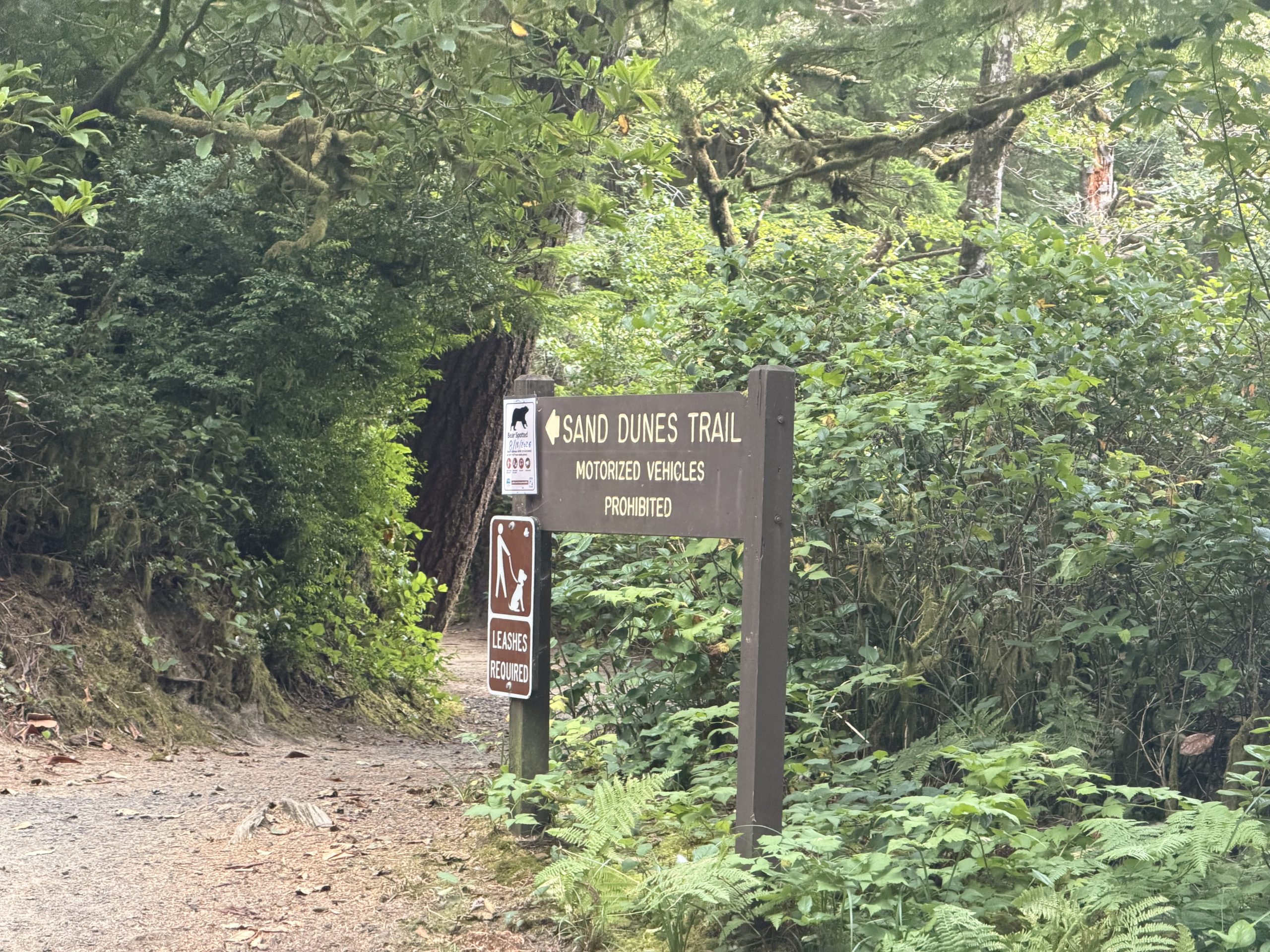
The park also has a little history woven into its landscape. During the 1930s, the Civilian Conservation Corps helped build rustic facilities, including the stone-and-log bathhouse at Cleawox Lake. Those historic structures remain part of the park’s character, connecting today’s campers with an earlier era of American outdoor recreation.
For a traveler like me, the appeal was straightforward: a scenic setting, a place to settle the truck and rooftop tent, and a peaceful base from which to prepare for the next day’s journey. Honeyman also has established camping facilities, restrooms, and hot showers—welcome amenities when you are spending weeks on the road. After setting up camp, I prepared a good meal and enjoyed the evening. There was no need to rush. The next morning would bring another destination and another set of experiences, but for now, I had found exactly what I needed: a comfortable place to rest in a beautiful corner of Oregon.
There is a rhythm to life on the road that I have come to appreciate. Explore until you have had your fill. Find a place to camp. Cook something good. Let the evening slow down. Sleep deeply. Wake up and do it all again.
River Roasters and a Sunday Morning in Florence
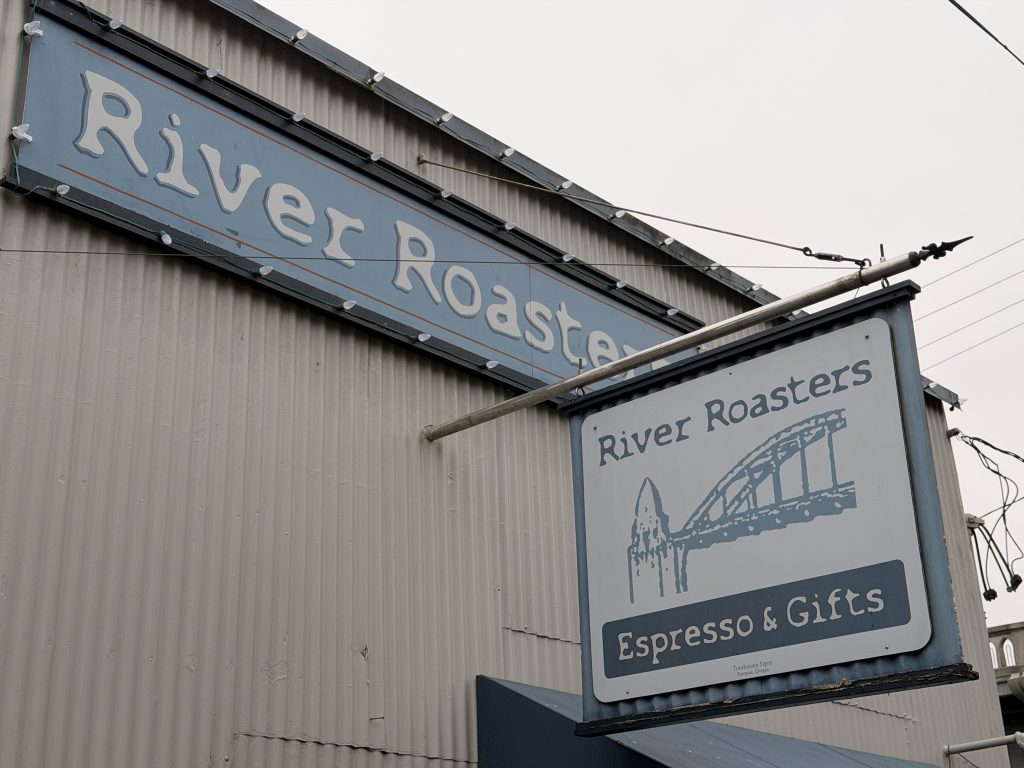
Sunday morning began with breaking down camp and heading into Florence for coffee. The short drive from Honeyman into town felt like a natural transition. I was leaving behind the quiet lakes and dunes of the campground and returning to the riverfront community that marked the next stage of the journey. I discovered River Roasters, a charming little coffee shop right on the river. It had everything I enjoy about a local place: great vibes, friendly wait staff, and a delicious cappuccino. I took my coffee for the road and prepared to leave the coast behind, at least for the time being.
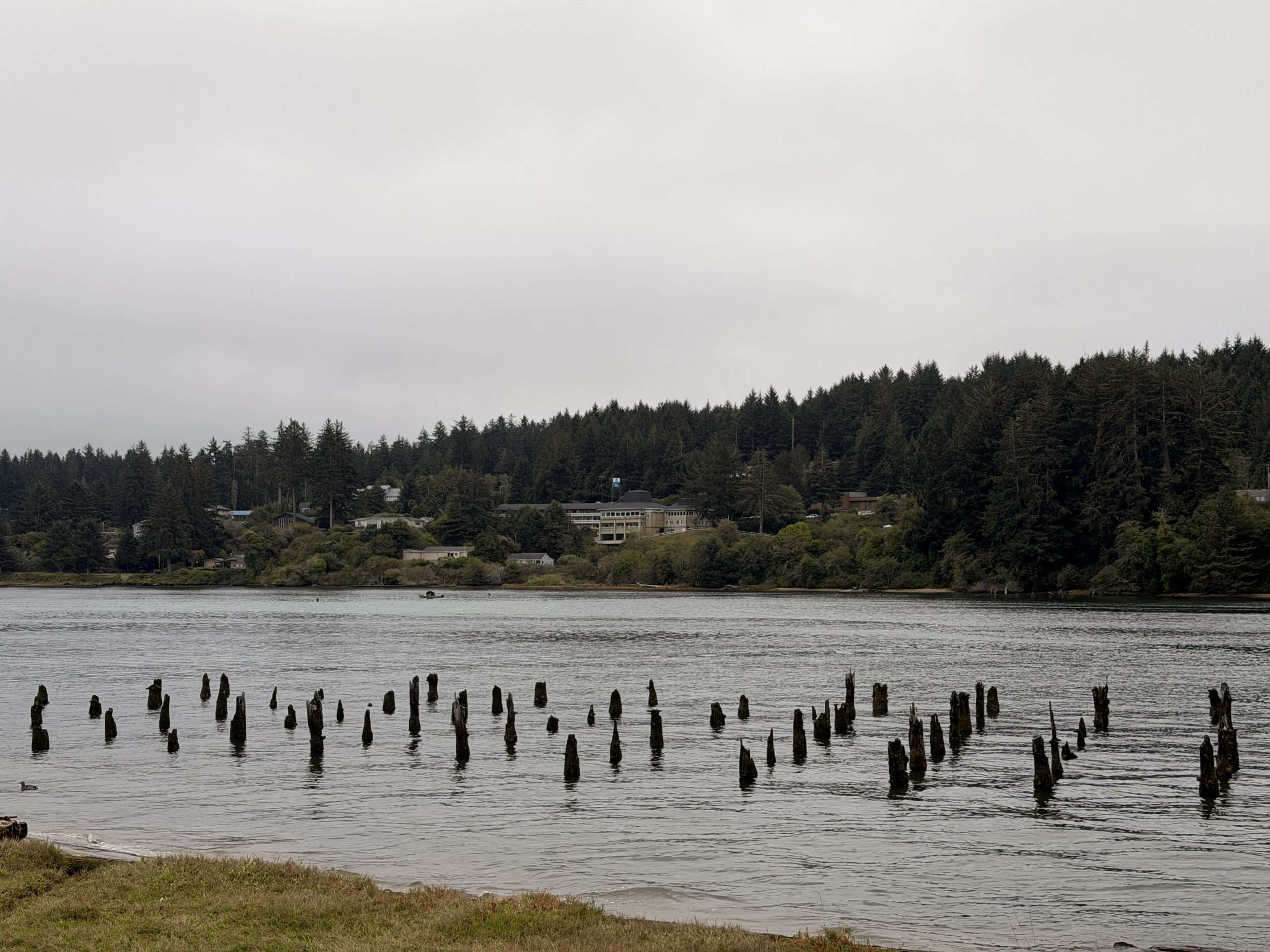
Florence sits near the mouth of the Siuslaw River, where the river meets the Pacific. The surrounding landscape brings together waterways, coastal dunes, forest, and ocean, giving the area its own distinctive character. After days of exploring the rocky shoreline farther north, it was a fitting place to pause before turning inland. The coffee gave me a moment to reflect on the route I had just traveled. From Newport and Waldport to Yachats, Cape Perpetua, Hobbit Beach, Heceta Head, and Florence, the coast had unfolded as a continuous story—one shaped by water, rock, forest, sand, and the people who have made their lives along it. But Florence was not the final destination for the morning. I still had one more meaningful stop ahead. From the river, I would turn inland toward Roseburg, where the coastal landscape would give way to the forests and personal connections that awaited me there. My next destination was Roseburg, Oregon, where I was meeting Brynna and her boyfriend, Matt.

The People Who Make the Journey
The drive from Florence to Roseburg carried me away from the immediate presence of the Pacific, but not away from the landscapes that had defined the trip. The road moved inland through the forests of southern Oregon, and the change felt purposeful rather than abrupt. I was leaving the coast behind because the journey was opening into its next chapter.
Brynna is the third and final daughter of my good friends Craig and Stephanie Wesley. Earlier in the trip, I had met Craig, Stephanie, and their two other daughters in Traverse City, Michigan. Now, several weeks and many miles later, the road was bringing me into the orbit of another member of their family.
We met at their church in Roseburg, and I attended Mass at their church.. Afterwards, I treated Brynna and Matt to a beautiful breakfast at a local restaurant. Over breakfast, we had a wonderful opportunity to talk about their lives, their careers, and the paths that had brought them to Oregon. Both Brynna and Matt had studied forestry at Michigan State University and were now working as forest rangers, each pursuing that shared passion in a different professional setting. Brynna works for a commercial enterprise, while Matt serves with the federal government.
Brynna and Matt: Careers Rooted in Oregon’s Forests

Our breakfast conversation in Roseburg took on an added dimension when we began talking about Brynna and Matt’s careers. Both had studied forestry, and both had chosen to build their professional lives around the forests of the Pacific Northwest. Yet they had taken different paths into the profession. Brynna worked for a commercial forestry enterprise, while Matt worked for the federal government as a forest ranger. I found that distinction particularly interesting. They shared an educational foundation and a commitment to the natural world, but their different employers placed them in different parts of the broader effort to care for Oregon’s forests.
As I listened to them talk about their lives and work, I began to appreciate just how much responsibility rests on the shoulders of people who make their living managing forests. Oregon’s woodlands are beautiful places to hike, camp, photograph, and explore, as I had been discovering throughout my journey. But behind that beauty is a complicated living system that requires knowledge, careful planning, and constant attention. Forestry is not simply a matter of planting trees and waiting for them to grow. It involves understanding soils, water, wildlife, tree species, disease, fire behavior, and the effects of changing weather patterns. It also requires people to make difficult decisions about how forests should be managed today so that they remain healthy and productive for generations to come.
Brynna’s world: Balancing working forests with long-term stewardship
Working for a commercial forestry enterprise can involve a wide range of responsibilities. Depending on her particular role, Brynna’s work might include evaluating timber stands, planning harvests, overseeing replanting, monitoring tree growth, protecting water quality, or coordinating with wildlife and environmental specialists.
Commercial forestry is an important part of Oregon’s economy. Timber supports mills, manufacturing, transportation, and jobs in rural communities. At the same time, a well-managed working forest must remain more than a source of wood. It must also sustain healthy soils, protect streams, provide wildlife habitat, and regenerate successfully after harvesting. Consider what goes into planning a timber harvest. A forester must determine which trees are suitable for removal, how much timber can be harvested responsibly, and how the remaining stand should be managed. Road placement, drainage, streamside protection, soil disturbance, and the timing of operations all matter. Decisions made before a single tree is cut can influence the condition of that landscape for decades.
Replanting is another important part of the process. Harvesting may provide an immediate economic return, but the long-term success of a working forest depends on what grows afterward. Foresters must consider which tree species are appropriate for the site, whether young trees will have enough water and sunlight, and how future drought, insects, and disease might affect their survival. Oregon’s changing climate makes these decisions increasingly complicated. Drought can weaken trees, while warmer conditions can increase stress from certain insects and diseases. A forest that regenerated successfully under yesterday’s conditions may face a different set of challenges as temperatures and rainfall patterns change.
Commercial foresters must also navigate the competing expectations of landowners, regulators, local communities, and environmental interests. There is a continuing challenge in balancing the economic value of timber with the ecological importance of forests that provide clean water, wildlife habitat, carbon storage, and recreational opportunities. Brynna’s specific responsibilities may be quite different from these examples, but this is the larger professional world in which commercial forestry operates. It is a field in which sound decisions require both practical knowledge and a long-term perspective.
Matt’s world: Stewardship of public lands
Matt’s federal position offered a different perspective on forestry. Federal forest rangers and other land-management professionals may work on national forests, where public access, recreation, wildlife, watershed protection, fire preparedness, and forest restoration are central concerns. Depending on his assignment, Matt’s responsibilities could involve inspecting forest conditions, supporting restoration projects, monitoring natural resources, coordinating field operations, or helping visitors use public lands safely and responsibly. Federal forestry work can also involve collaboration with scientists, firefighters, state agencies, contractors, tribal partners, and nearby communities.
One important challenge is wildfire. Fire is a natural part of many western forest ecosystems, but decades of fire suppression, dense vegetation in some dry forests, prolonged drought, and changing climate conditions have increased the risk of severe fires in vulnerable areas. Forestry professionals may work to reduce that risk through selective thinning, prescribed burning, removal of accumulated fuels, and restoration of more resilient forest structures. These approaches must be adapted to the particular ecosystem rather than applied uniformly everywhere.
Another responsibility is protecting the ecological systems that public forests support. Streams and rivers depend on healthy watersheds. Fish need suitable water temperatures and habitat. Wildlife needs food, shelter, and connected landscapes. Trails, campgrounds, and other recreation facilities must be maintained while minimizing damage to the surrounding environment. Forest restoration can be especially complex because the work rarely stops at a property boundary. A fire, watershed, or wildlife habitat may span federal, state, tribal, and privately owned land. Effective management often requires cooperation among multiple organizations with different budgets, priorities, and responsibilities.
Federal forest management also involves public accountability. Decisions about timber harvesting, road construction, prescribed fire, habitat protection, and recreation can attract strong and sometimes conflicting opinions. Professionals must work within applicable laws, scientific guidance, environmental review, and public processes while trying to achieve practical results on the ground.
I could imagine how rewarding that work might be: spending time outdoors, using scientific knowledge to solve real problems, and contributing to the preservation of landscapes that belong to the public. I could also appreciate its frustrations. Results may take decades to become fully visible, and even carefully planned projects can be affected by drought, wildfire, limited funding, or changing priorities.
The challenges Oregon’s forests face
The forests of Oregon are remarkably diverse. The moist, productive forests west of the Cascade Range differ significantly from the drier pine forests of eastern and southern Oregon. A management practice that makes sense in one setting may be inappropriate in another.
Among the major challenges facing the state are:
- Wildfire resilience. Reducing hazardous fuel loads and restoring more resilient forest conditions can help protect communities and ecosystems, although no management strategy can eliminate wildfire risk.
- Drought and rising temperatures. Water stress can weaken trees and make them more susceptible to insects and disease.
- Insects and forest disease. Bark beetles, tree pathogens, and other damaging organisms can affect forest health, particularly when trees are already stressed.
- Wildlife and watershed protection. Forestry operations must account for habitat, stream conditions, soil stability, and the long-term health of the surrounding ecosystem.
- Sustainable economic activity. Oregon must balance the value of timber and rural employment with the ecological and recreational benefits that forests provide.
These are not abstract concerns. Oregon’s 20-Year Landscape Resiliency Strategy identifies approximately 13 million acres of high-risk forest and rangeland as a priority for improving resilience to wildfire and other threats. The strategy brings together private landowners and local, state, and federal partners to support work such as thinning, prescribed burning, invasive-species control, and post-fire restoration. The scale of the challenge reinforces an important point: protecting Oregon’s forests is not the responsibility of one agency or one type of forester. It requires cooperation across ownership boundaries, disciplines, and communities.
The impact of their work
The most meaningful results of forestry are not always immediately visible. They may appear years later as a healthier stand of trees, a recovering watershed, improved wildlife habitat, or a community better prepared for wildfire. For commercial forestry, responsible management can help maintain a renewable supply of wood, sustain rural jobs, and encourage forests to regenerate after harvesting. For public-land professionals, restoration and stewardship can help preserve ecosystems, improve recreation opportunities, protect watersheds, and maintain the natural heritage of places that millions of people value.
The two sides of forestry are not necessarily opposing missions. Commercially managed lands and public forests have different objectives and rules, but both can contribute to Oregon’s long-term environmental and economic well-being when decisions are grounded in sound science, appropriate safeguards, and a clear understanding of the land.
I left our conversation with a greater appreciation for the people who do this work. As a traveler, I had been enjoying the finished product: the towering trees, winding forest roads, mountain views, and beautiful landscapes that make Oregon such a memorable destination. Brynna and Matt represented another side of that experience—the people whose professional lives are connected to the difficult, often unseen work of caring for those landscapes. It made our breakfast in Roseburg all the more meaningful. I had arrived to spend time with the daughter of longtime friends and meet the person who shared her life. I left with a better appreciation for the paths they had chosen and the contribution that forestry professionals can make to the future of Oregon.
There was something fitting about that encounter. After traveling through so much of America, I was reminded once again that the country’s natural beauty does not simply exist for us to enjoy. It is also something we have a responsibility to understand, protect, and pass along. And in their own professional ways, Brynna and Matt had chosen to make that responsibility part of their lives.
It was a lovely way to spend a Sunday morning—a chance to share time, catch up, and appreciate the connections that make a long journey feel less like a solitary expedition.
One of the great surprises of traveling is how often the people become as memorable as the places. You may set out chasing coastlines, mountain lakes, and spectacular photographs, but along the way, friends and family connections become part of the landscape. They give the journey its human dimension. There is something especially rewarding about reconnecting with people through the relationships that already matter in your life. A meeting in Roseburg can carry the warmth of an earlier encounter in Traverse City, even though thousands of miles and countless experiences separate the two.
After breakfast, it was time to move on. I pointed the Hemi toward Crater Lake, carrying with me the memory of crashing waves, rocky headlands, beautiful bridges, a historic lighthouse, quiet campgrounds, welcoming coffee shops, and a Sunday morning spent with good people. The Oregon coast had delivered exactly what I had hoped for. It offered the raw beauty I had come looking for, but also the quieter pleasures of life on the road: good food, a well-earned night’s sleep, the freedom to explore, and the unexpected connections that turn a trip into a story worth telling.
I left the Pacific behind with another landscape waiting ahead. And that, after all, is the magic of the journey.